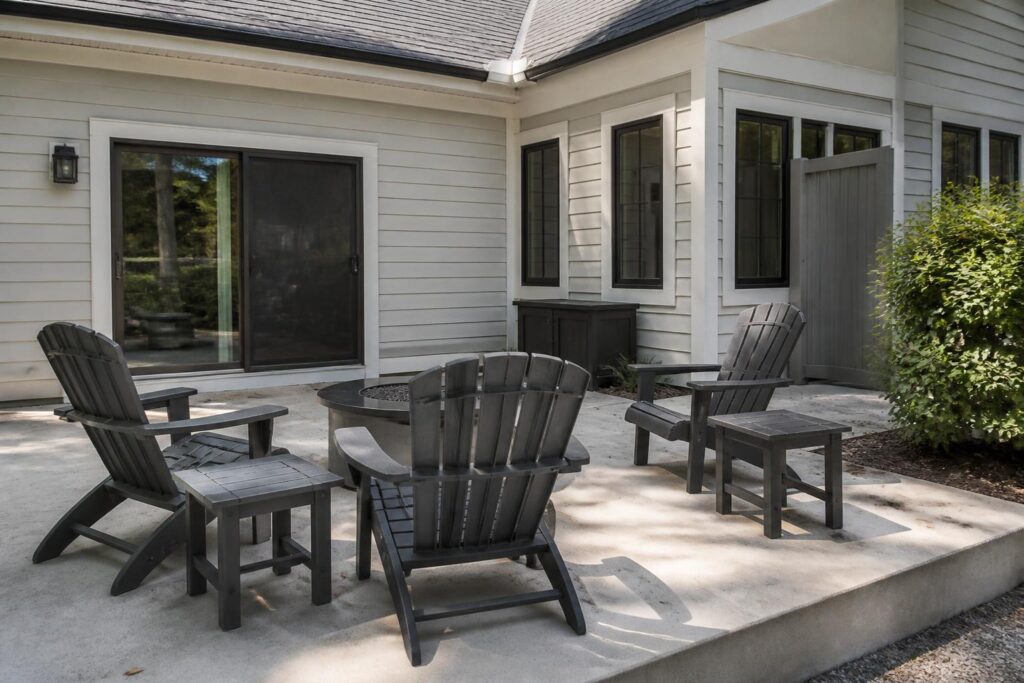

Learning how to choose patio furniture for a Florida home starts with the way you use the space. A covered lanai for morning coffee, an open pool deck, and a balcony with limited storage need different layouts. Before comparing colors, decide where people will sit, how they will move around, and where every loose piece will go before severe weather.
You can make a useful shortlist with a tape measure and a few written specifications. Compare seat height, overall dimensions, material, hardware, care instructions, and warranty terms. Then check the delivery and return conditions before ordering. This guide walks through those decisions using the current Plastic Furniture To Go collection as concrete examples.
How to Choose Patio Furniture That Fits Your Florida Space
Measure the usable area after accounting for doors, screens, pool gates, steps, and equipment that needs access. Mark the door swing on your sketch. A chair can fit inside the patio dimensions while still blocking the route from the house to the yard when someone sits in it.
Use painter’s tape to mark the full footprint of each proposed piece. Leave extra room to approach a chair, pull it out, extend your legs, and stand up. These needs vary by person and layout, so walk through the arrangement before treating the sketch as finished. Keep required exits and access routes clear, and follow any building or condominium rules.
Match the seat to the activity
For a lounging area, compare the Hampton Adirondack Chair. It measures 36 inches wide × 30 inches deep × 38 inches high, with a 16-inch seat height. Use those measurements to check the footprint and compare the sitting position with a chair you already find comfortable. A low lounge seat serves a different purpose from upright dining seating.
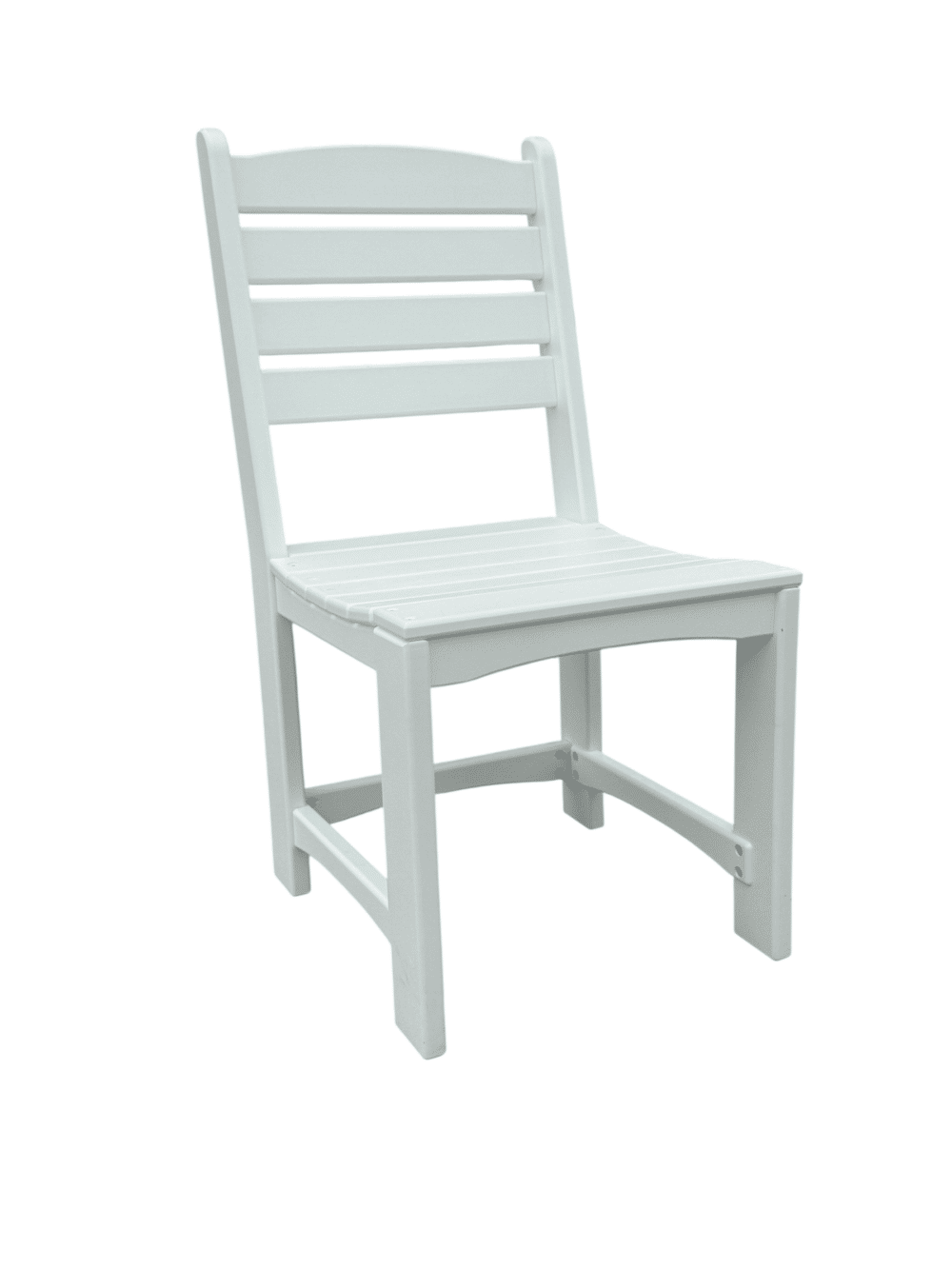
The Armless Café Chair measures 20.5 inches wide × 17.5 inches deep × 35 inches high, with a 17-inch seat height. Measure your table’s underside and the distance between its legs to assess clearance. For an outdoor counter, the Counter Height Stool has a 25-inch seat height; compare that with your counter and preferred knee space before choosing the quantity.

Leave room for the small pieces
An end table needs space of its own. The Hampton Round End Table has a 17-inch round top; the square version has a 15-inch × 15-inch top. Both are 18.5 inches high. Compare the top shape with the gap beside the chair, and check that a table will not narrow a walkway or interfere with someone standing.
The patio furniture fit calculator can compare a simple row of seating and an end table with your available dimensions. Use it as a first footprint check, then confirm the real arrangement with tape. It cannot account for every door swing, personal mobility need, or site requirement.
Compare Written Material and Product Details
Florida shoppers often see broad descriptions such as “outdoor,” “poly,” or “weather resistant.” Those words do not replace a product specification. Ask what the actual item is made from, what fasteners it uses, and what care guidance comes with it. Avoid assuming that products with similar names have identical construction or performance.
Every item in our current collection uses Marine Grade Polymer with 3/16-inch stainless steel hardware and is American-made. Our Marine Grade Polymer furniture guide brings the confirmed specifications together. We do not publish a particular HDPE grade or a load-capacity rating, so neither should be inferred from the material name or the weight of the chair.
Product weight is useful for planning handling. The Hampton Adirondack Chair weighs 52 lb, the Armless Café Chair 27 lb, the Counter Height Stool 21 lb, and either Hampton end table 15 lb. Consider who will move those pieces for cleaning and storage. Ask for help when a piece is too heavy or awkward to handle comfortably.
Keep product weight separate from shipping weight, which may include packaging. Also keep both separate from load capacity and wind resistance. A heavier piece does not come with an implied storm rating, and a warranty is not evidence that furniture can never tip, move, or become damaged.
Plan for Sun, Cleaning, and Storm Storage
Look at the patio during the hours you expect to use it. Morning shade can become direct afternoon sun. Plan the seating position around the shade you actually have, and check any sun-exposed seat before sitting. Do not assume that a light color or a particular material will always remain comfortable to touch.
For routine care, use the instructions supplied for the specific furniture and finish. Clear leaves and debris, inspect connections, and check for damage before use. Do not transfer a pressure-washer setting, solvent, or bleach recipe from another product without confirming that it is suitable. Our plastic furniture cleaning guide explains the questions to check before selecting a method.
Choose a storm-storage location before you need it. Measure the route through the door, identify who can move each item, and include tables, cushions, umbrellas, and decorations. A covered patio or screened enclosure should not be treated as proof that loose furniture is secured.
The National Weather Service’s hurricane-preparation guidance recommends bringing loose patio items indoors. Follow local alerts and instructions, and complete preparations before hazardous conditions arrive. If indoor storage is impractical, ask about appropriate manufacturer-approved securing methods in advance. Never rely on chair weight alone or go outside to rescue furniture during dangerous weather.
Check the Full Order Before Buying
Build the order around the seats you need now. Confirm each color, quantity, dimension, and current price in the product selector. Check the total for the whole arrangement, including any tables, rather than comparing the price of a single chair with the cost of an entire set.
Plastic Furniture To Go includes free nationwide shipping. Orders generally ship within three business days; the existing carrier-transit estimate is a separate two to seven business days. Handling and transit are different stages, so do not read either estimate as a guaranteed arrival date for a party or holiday.
Products ship knock-down in a box with included hardware and require simple assembly, generally about 20 minutes. Make space to unpack, check the supplied parts, and follow the assembly instructions. If anything looks damaged or incomplete, document it and contact the store before continuing.
Review the returns and warranty terms before assembly. The return window is 30 days from receipt, with eligibility conditions including new, unused, unassembled items, original packaging, and proof of purchase. For a customer-requested return, the customer pays return packaging and freight, and the refund excludes original shipping. Seller-error returns follow the policy’s separate cost provisions.
Each piece has a seven-year structural warranty and a separate five-year fading warranty. Read the complete terms and exclusions; coverage periods are not predictions of lifespan. Save your order information and keep the packaging while you inspect the delivery and confirm that you will retain the furniture.
Frequently Asked Questions
What should I measure before ordering patio furniture?
Measure the usable patio, door swings, walkways, and the full footprint of each piece. For dining chairs and stools, also measure the table or counter underside and space between supports. Compare seat height with seating you already use comfortably.
Does heavy patio furniture stay put during Florida storms?
Weight alone does not establish wind resistance. Make a storage or appropriate securing plan for every loose item, follow local weather instructions, and prepare before conditions become dangerous. Do not assume that a substantial chair can be left unsecured.
Does Marine Grade Polymer mean the furniture needs no care?
No. Check the product’s care and assembly instructions, inspect surfaces and connections, and address damage before continued use. The material name does not remove the need for cleaning, sensible placement, or storm preparation.
Can I buy individual pieces for a small lanai?
Yes. Chairs, stools, and end tables are sold individually in the current collection. Start with your measured layout and choose the pieces that serve it. Browse the outdoor furniture collection, or contact the store with a product question before ordering. Knowing how to choose patio furniture comes down to checking the fit, the written specifications, and the practical work of using and storing it.