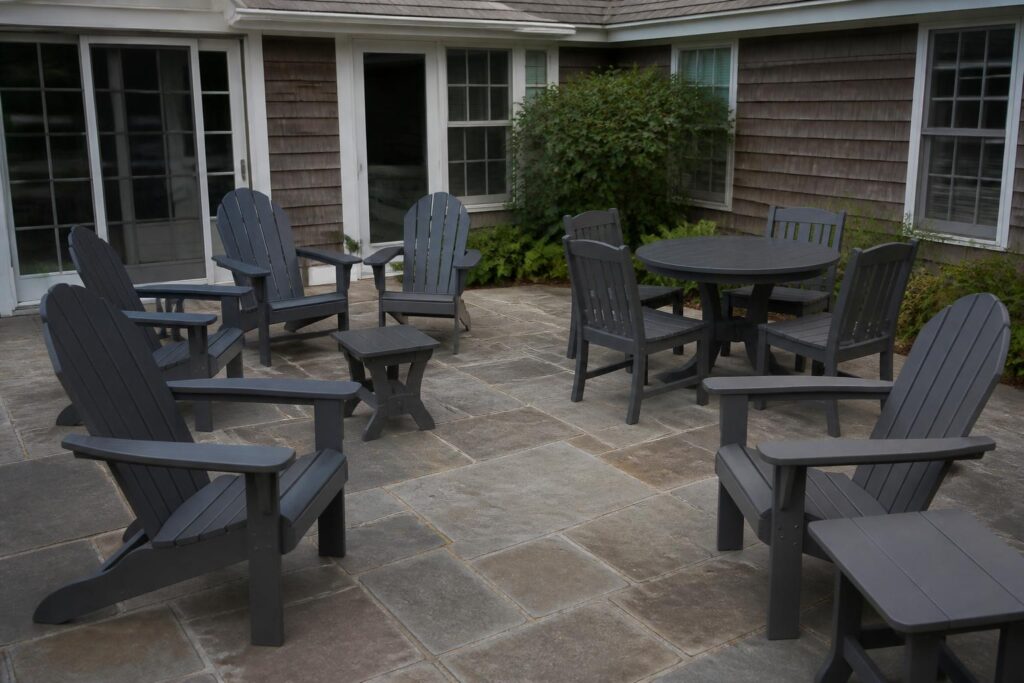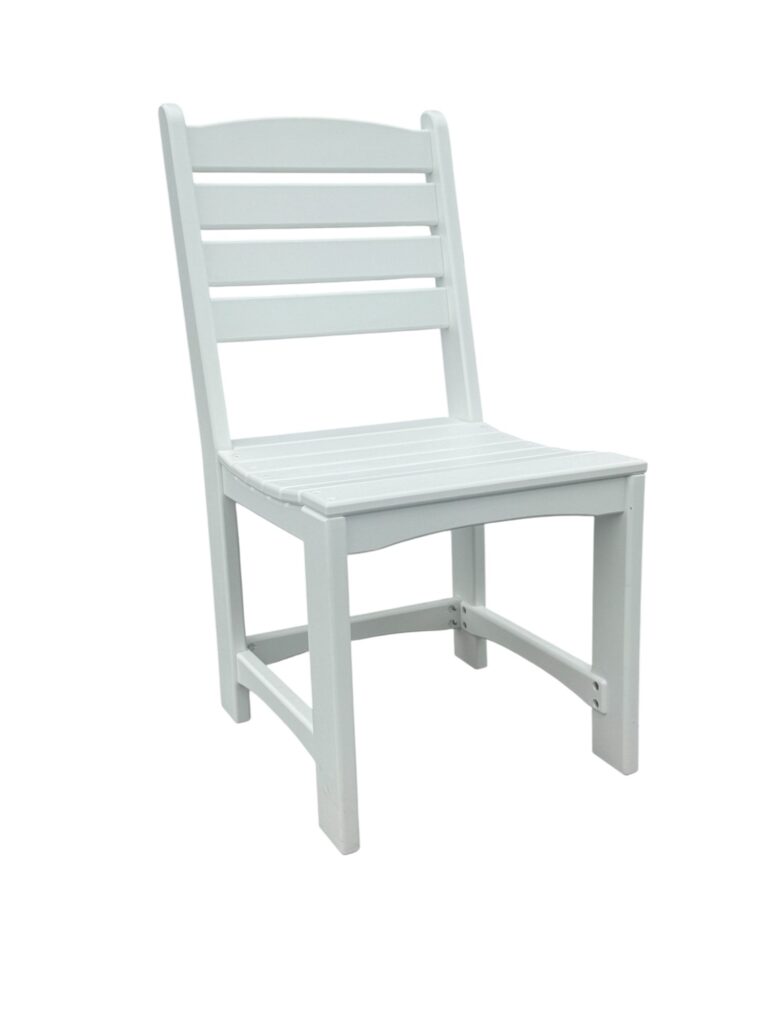
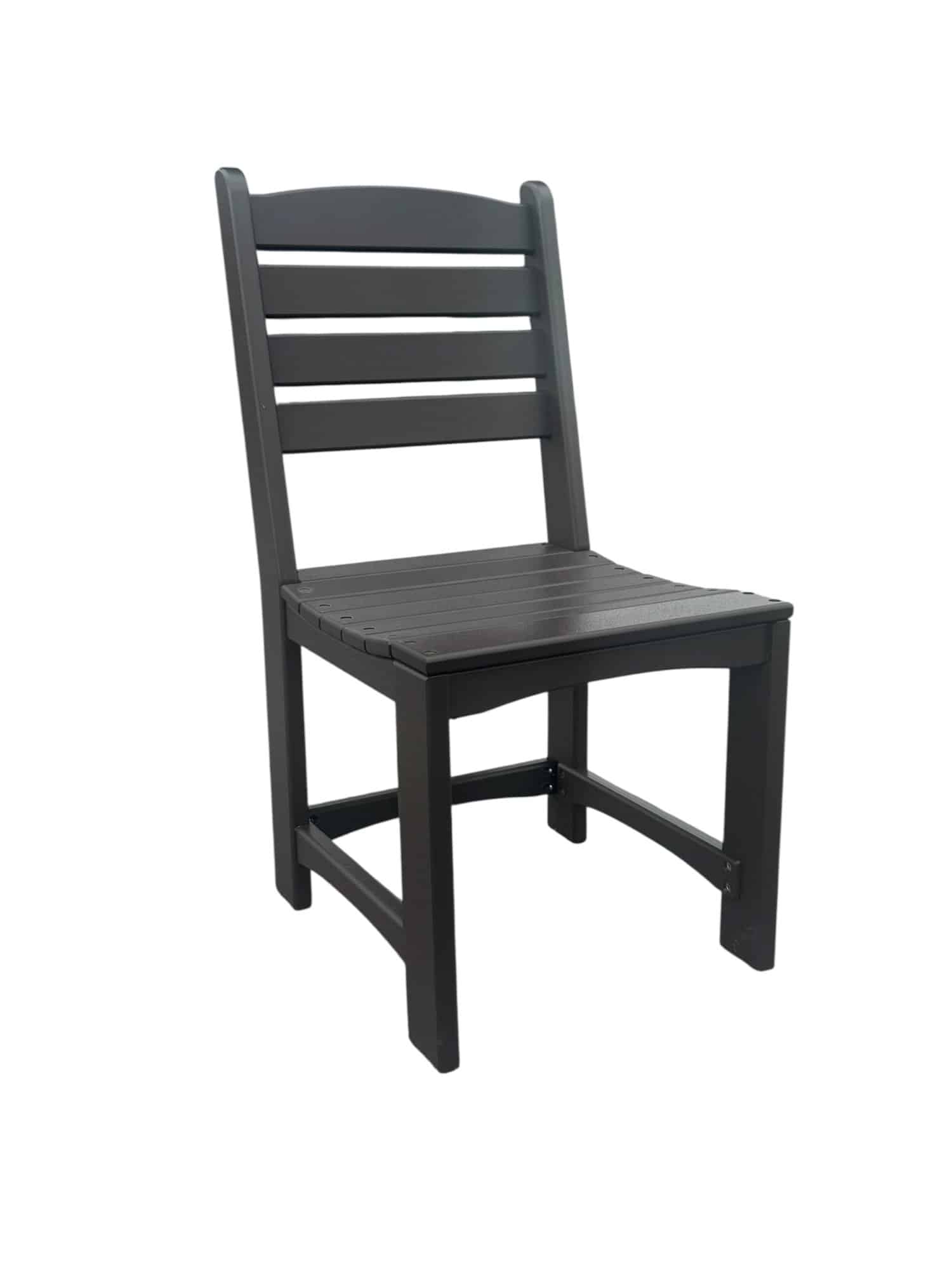
Armless patio dining chairs can be useful in a small layout, but the space they save depends on the exact chair and table. This guide explains how to check the overall width, seat height, table apron, and room needed to pull a chair out. Start with measurements rather than assuming that removing armrests automatically creates another usable seat.
Why Armless Chairs Change Small-Patio Math
A traditional outdoor dining chair with arms typically measures 22 to 25 inches wide at the armrests. An armless patio dining chair usually runs 17 to 19 inches wide at the seat. That difference of five to eight inches per chair sounds minor until you multiply it across a table. Four armed chairs demand roughly 88 to 100 inches of linear space when placed side by side. Four armless chairs need only 68 to 76 inches. On a 10-foot patio, that recovered space is the difference between a cramped setup and a walkway you can actually use.
An armless chair may tuck farther under a table if its back, seat, legs, and overall height clear the tabletop and apron. Measure those parts on both products. Check table-leg placement as well: an opening that is wide enough at the edge may narrow underneath. Test the planned arrangement with cardboard or tape rather than relying on a universal number of inches saved.
For balconies, condo patios, townhome courtyards, and compact backyards, that reclaimed footprint is often the difference between a dining area you use and one that just looks pretty in staging photos.
Measure Your Patio Before You Shop
Before you look at a single chair, grab a tape measure and sketch your space. You need three numbers: the total usable dimensions of the patio, the size of any table you plan to keep, and the clearances you need on each side for people to move.
The Clearance Rules Worth Memorizing
Standard dining clearance guidance is 36 inches from the table edge to the nearest wall or obstacle. That’s enough for a person to pull out a chair, sit, and stand without hitting anything behind them. If space is tight, 30 inches is the working minimum, and you’ll want the chair on that side to be armless so it can slide back farther without collision. On the “walk-through” side, budget 44 inches so someone can pass behind a seated diner.
Table Footprint Versus Patio Footprint
Small square patio tables usually run 30 to 36 inches per side and seat two to four. Round tables at 36 to 42 inches seat four comfortably. If your patio measures 8 by 10 feet, a 36-inch square table centered with armless chairs on all four sides needs about 8.5 by 8.5 feet including clearances – workable, but tight. Push the table to a wall, use armless chairs on three sides only, and you free up the fourth side entirely for a grill or a lounge chair.
Draw It on Paper First
A ten-minute sketch at 1 inch = 1 foot scale saves you from ordering furniture that technically fits but ruins the flow. Cut paper rectangles to represent chairs and the table, then slide them around your patio outline. You’ll see instantly whether armless is the answer or whether you need to go even smaller.
How Many People You Can Actually Seat
Seating capacity is where armless patio dining chairs earn their keep. Each diner needs 22 to 24 inches of table edge to eat comfortably without bumping elbows. On a 60-inch rectangular table, that means three armless chairs fit along each long side – six total plus one on each end for eight. Try that with armed chairs and you’re jamming shoulders by the second course.
Round tables tell a similar story. A 48-inch round table seats four comfortably with any chair, but bumps to five or even six with armless seating because you can slide chairs closer along the curve. A 60-inch round can genuinely hold six armless diners with room to breathe, where the same table with armed chairs feels crowded at five.
Bench-and-chair combinations open up further. On the wall-facing side of a rectangular table, a slim outdoor bench holds two to three people. Pair that with two armless chairs on the opposite side and one at each end, and a 60-inch table seats six or seven in a footprint that would only hold four with traditional armed seating. If you host holidays or weekend dinners on a small patio, the math is worth the switch on its own.
One tradeoff to name honestly: armed chairs are more comfortable for long, lingering meals because you have somewhere to rest your forearms. For patios that see two-hour dinners regularly, some people mix both – armed chairs at the ends, armless along the sides.
Materials That Suit Outdoor Life
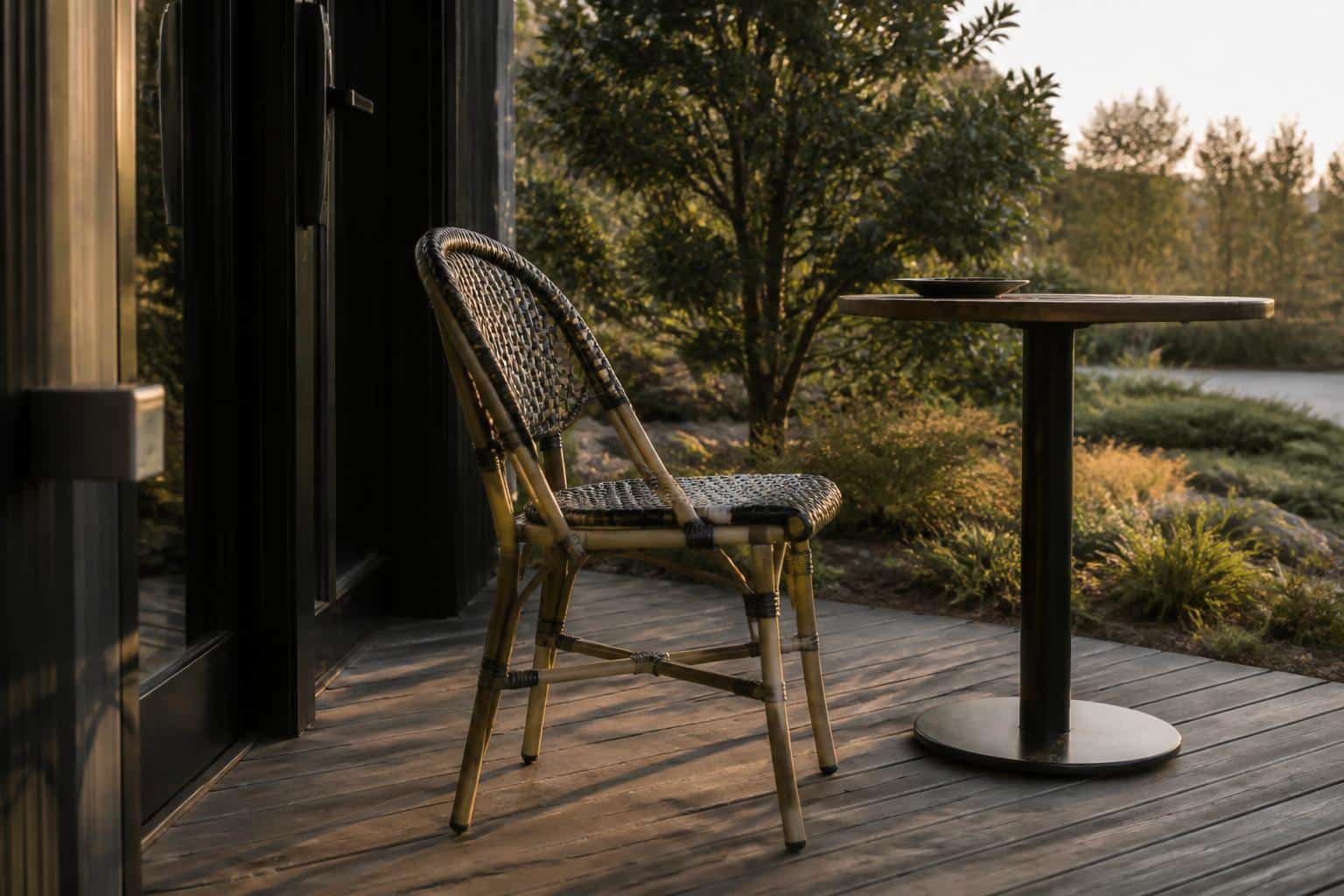
Whatever chair style you choose, the material decides how it holds up. Outdoor dining chairs generally fall into four camps: wood, metal, woven synthetics, and poly or recycled plastic. Each has tradeoffs worth knowing before you spend.
Wood, metal, woven materials, and polymer furniture have product-specific finishes and care requirements. Compare the maker’s instructions for the exact chair. Do not assume that all wood requires annual oiling, every metal finish behaves alike in sun, or all woven outdoor furniture has the same lifespan.
For poly or recycled-plastic furniture, ask for the material disclosure, care instructions, and written coverage. A material name does not establish a resin grade, recycled-content percentage, cold-weather performance, or fading rate. The EPA recycling overview explains the general topic; use manufacturer information for an individual product.
Check the published hardware specification and compare the complete warranty terms. PFTG uses 3/16-inch stainless steel hardware and offers seven-year structural and five-year fading coverage. Those facts do not guarantee immunity from corrosion or damage. Read the written policy for covered issues and exclusions.
Styling Armless Chairs on a Small Patio
Slim seating gives you visual breathing room, and there are a few tricks that make a small patio feel intentionally designed rather than just under-furnished.
Match chair color to the wall or fence behind them to make the chairs recede visually, which makes the patio read larger. White chairs against a light stucco wall almost disappear until someone sits down. Alternatively, pick one bold chair color and repeat it in one other element (a planter, a cushion, a door) to create a designed look without clutter. Avoid mixing three or more colors in a small space – it tightens the room visually.
Keep the table lower-profile if you can. A slim-apron table paired with the Armless Café Chair reads lighter than a chunky farmhouse table with the same footprint. Skip a rug on a truly small patio – rugs shrink spaces optically. Instead, define the dining zone with a single planter at each corner.
Finally, resist the urge to fill every square foot. One clear zone for dining and one clear zone for anything else (grill, lounge chair, plant collection) reads better than three overlapping half-zones. If you’re building the whole setup from scratch, browse the full lineup at the shop page and start with the table size that leaves you the clearances you measured, then choose chairs around that.
Frequently Asked Questions
Are armless patio dining chairs less comfortable than chairs with arms?
Comfort preferences vary. Compare the seat height, depth, back shape, and support with seating you know. Some people prefer armrests, while others value an open side for getting in and out. A mix of chair styles can work if the exact measurements suit the table and the people using it.
How much space should I leave behind each chair?
Aim for 36 inches from the table edge to the nearest wall or obstacle. That’s enough clearance for someone to pull out a chair, sit, and stand without hitting anything behind them. On the side people walk past, budget 44 inches. In genuinely tight spaces, 30 inches works if the chair is armless, because armless chairs slide back farther before the seatback hits an obstruction.
Can armless chairs work at a counter-height or bar-height table?
Armless stools are available for raised surfaces, but use the actual seat height and the height of the counter’s lowest obstruction. A 10–12-inch difference can be a starting point for a fit check, not a guarantee. Include a cushion, footrest position, knee space, and the intended user’s comfort when comparing measurements.
Do armless chairs blow over more easily in wind?
Arms, frame shape, product weight, and the surface underneath all affect how a chair fits your space. None establishes a wind rating. Check the model’s specifications, choose a storage method you can manage, and prepare loose furniture before severe weather. Stack chairs only if the manufacturer says the model is stackable.
For a separate chair-side surface, compare the 15-inch footprint of the Hampton Square End Table. It is an end table, not a dining table.
Measure first, then compare the Armless Café Chair with your table and walking space. PFTG offers American-made furniture with free nationwide shipping. Use the contact form for questions about dimensions or current colors before ordering.