

HDPE outdoor furniture listings can sound very similar even when the finished products differ. HDPE is short for high-density polyethylene, but that material name does not tell you everything about a chair’s design, hardware, finish, recycled content, or intended use. This guide explains what to ask when a listing uses the term and how to keep those questions separate from the specifications for Plastic Furniture To Go’s Marine Grade Polymer collection.
What the HDPE label does and does not establish
A polymer name identifies a material category. It does not, by itself, establish the composition of every component in a finished chair. Ask the manufacturer whether the description applies to the seating surfaces, frame, or both. Ask separately about fasteners, supporting parts, and any cushions or coatings.
Do not infer a production process from the label. A listing needs its own evidence for claims about molding, extrusion, board thickness, additives, or color throughout the material. Photographs can help you understand the shape and visible assembly, but they cannot establish the exact resin formulation or a tested performance rating.
Product weight is another separate fact. It helps you plan delivery, assembly, rearranging, and storage. It does not substitute for a load-capacity rating or prove that a piece will stay in place during wind. If a particular load rating is essential, ask for the model-specific information before ordering.
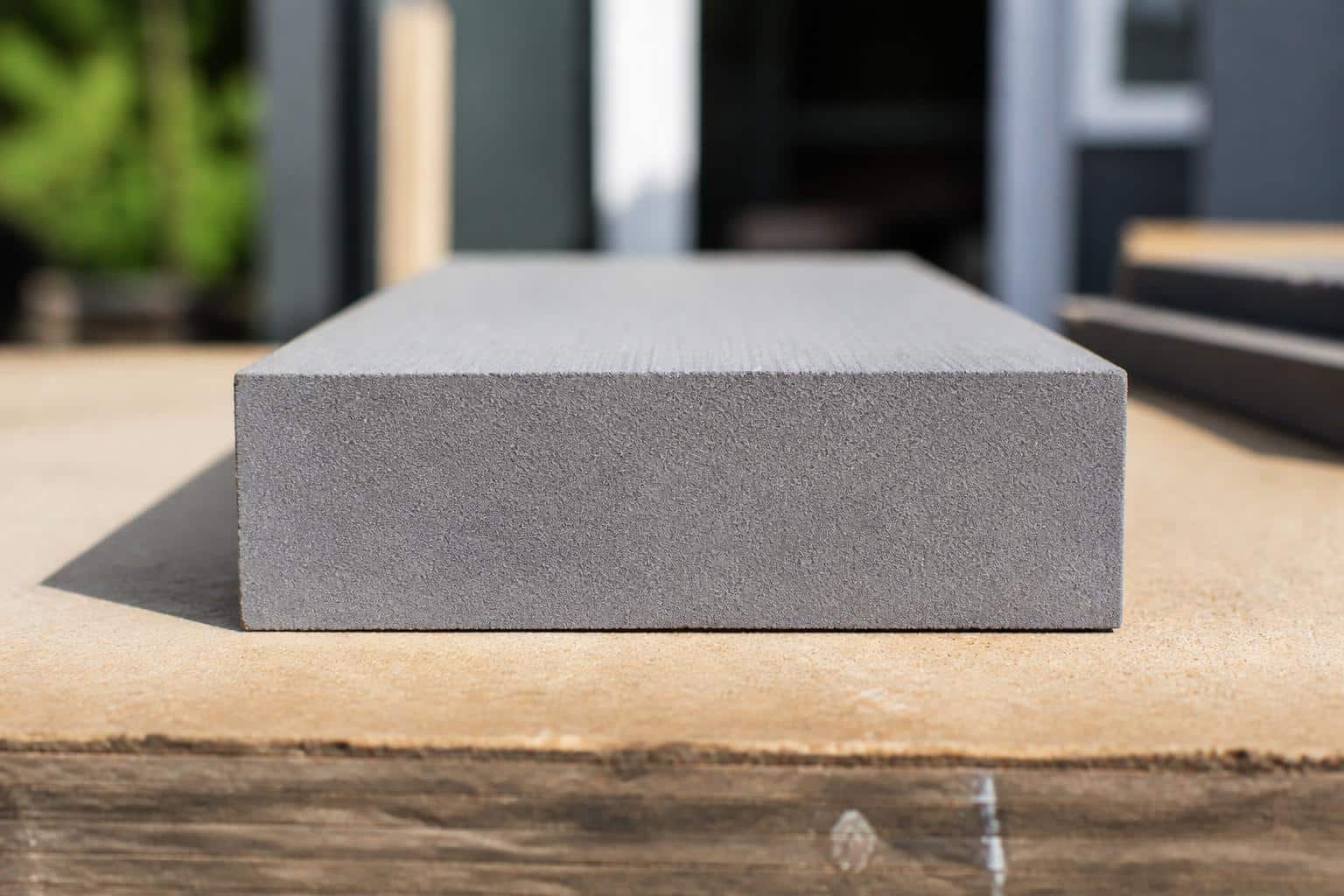
Ask for evidence behind recycled-content claims
Some furniture descriptions include recycled-content claims. Record exactly what is being claimed: a percentage, a type of feedstock, or a statement about manufacturing waste. Those are different disclosures. A company recycling its offcuts does not automatically mean that the finished chair contains a stated proportion of post-consumer plastic.
The EPA recycling overview provides general background about recycling. Use it to understand the topic, then ask the seller for product-specific documentation. A general recycling source cannot verify the composition, strength, service life, or environmental benefit of an individual furniture model.
Compare claims at the same level. If one company reports recycled content for a component and another reports a figure for the whole product, the numbers may not be directly comparable. Likewise, a material’s ability to be recycled does not establish that your local collection program accepts the complete chair. Check local instructions before disposal.
Compare the finished chair’s practical specifications
Start with overall width, depth, height, and seat height. Compare them with your patio and a chair you already find comfortable. Leave additional space for walking, pulling a chair out, sitting down, and standing up. A material description cannot answer those fit questions.
Read the care instructions for the exact finished product. Check which cleaners and tools are permitted, whether there are special instructions for hardware or finishes, and what the maker says about seasonal storage. Do not assume that advice for another HDPE product applies to every chair with the same base material name.
Plan shade and check sun-exposed seating surfaces before use. Do not treat the words “HDPE,” “poly,” or “outdoor” as a temperature guarantee. Wind preparation also applies across materials: make an indoor-storage or appropriate securing plan for loose furniture before severe weather arrives, following local alerts and the manufacturer’s guidance.
Finally, ask about repair and replacement parts. Knowing how to identify a fastener or obtain instructions is more useful than an unsupported statement that the chair will last a fixed number of years. Keep the model information and receipt with the care guide so they are available if you need help.
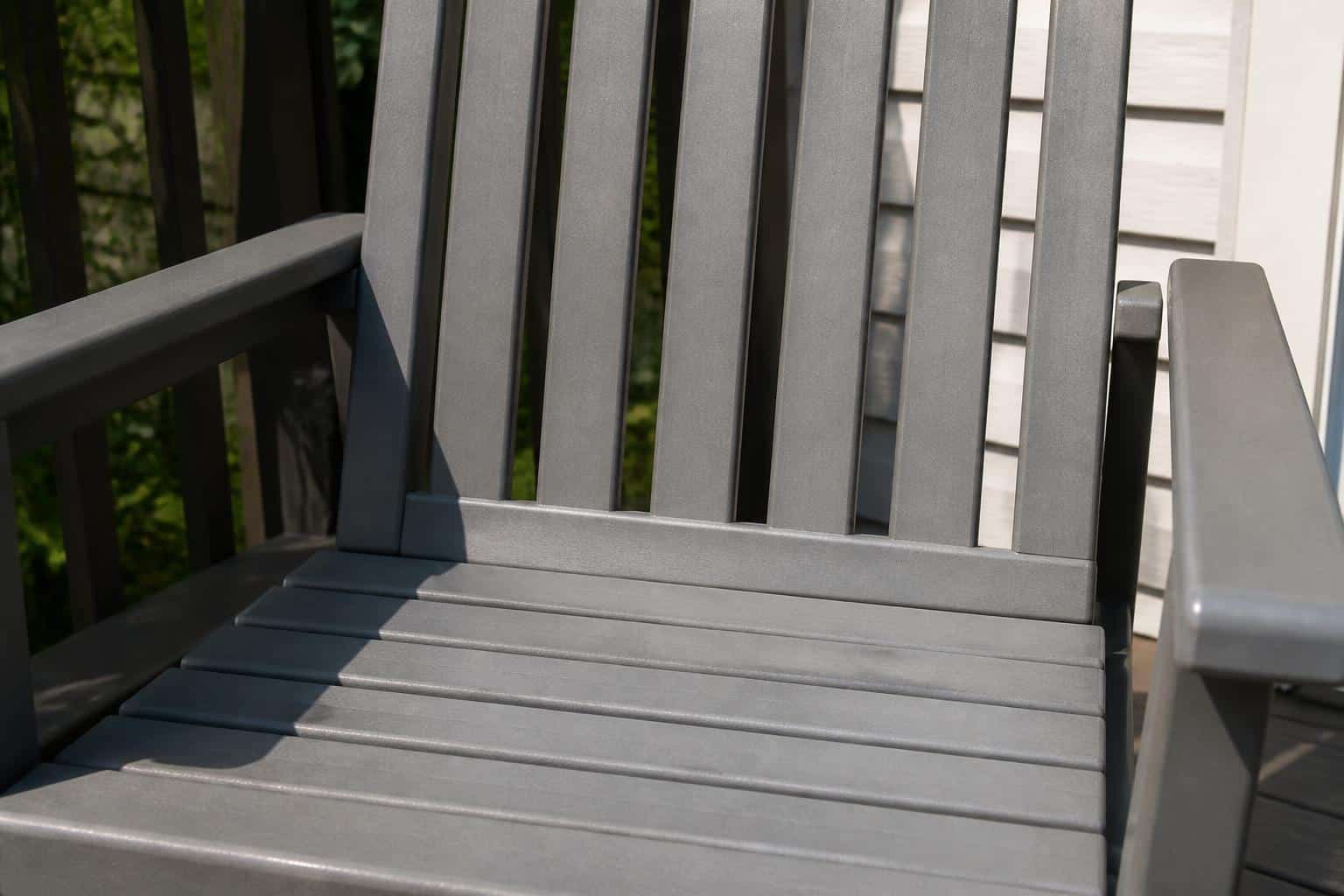
Keep PFTG’s Marine Grade Polymer specification distinct
Plastic Furniture To Go identifies its furniture material as Marine Grade Polymer. We use 3/16-inch stainless steel hardware and do not publish a specific HDPE grade or a load-capacity rating. This HDPE guide should not be read as changing that product specification or supplying an unverified manufacturing method.
The collection’s published product weights are 52 lb for the Hampton Adirondack Chair, 27 lb for the Armless Café Chair, 21 lb for the Counter Height Stool, and 15 lb for either Hampton end table. Use these weights for handling and storage planning. They do not establish wind resistance, stability under every condition, or safe loading.
The family business confirms that it recycles 100% of manufacturing waste. That is a manufacturing-waste statement, not a finished-product recycled-content percentage. If composition is central to your purchase decision, ask the seller for the exact disclosure rather than treating those two claims as equivalent.
PFTG’s written coverage includes seven-year structural and five-year fading warranties. Read the coverage, exclusions, and return terms in full. A warranty is not a universal lifespan prediction, and its duration does not mean the furniture is immune to damage, fading, or maintenance needs.
Frequently asked questions
Is “poly” always the same as HDPE?
Do not assume it is. Ask the seller to identify the material in the exact product. Marketing shorthand may not provide the same detail as a specification sheet.
Does HDPE mean the chair is made from recycled plastic?
The material name alone does not disclose recycled content. Look for a separate, product-specific statement that explains the percentage and what parts it covers.
How long will an HDPE chair last?
There is no universal service life. Design, exposure, use, care, and individual product condition vary. Compare written coverage and follow the manufacturer’s instructions.
Can I use the same cleaner on all plastic outdoor furniture?
Check the instructions for the finished product and any coating or hardware. Do not transfer pressure-washing or chemical-cleaning advice from another chair without confirming compatibility.
Where should I compare PFTG products?
Browse the current collection for model details and colors, or contact the team with a question about the published specifications.

