
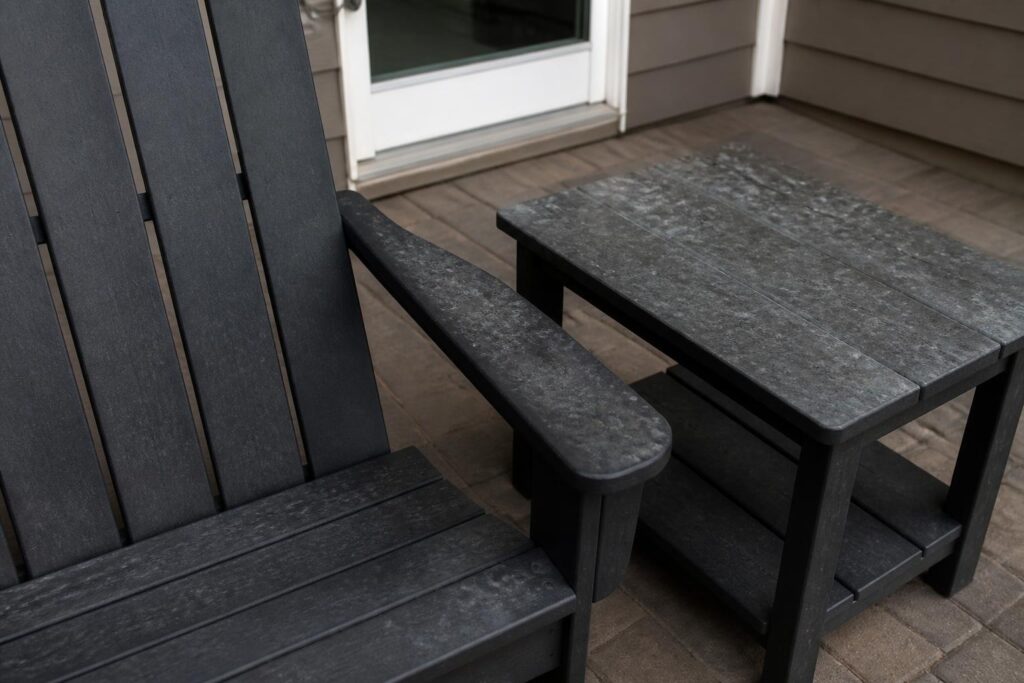
Trying to remove hard water spots from plastic furniture can feel harder than it should. Those cloudy dots and chalky rings often show up after sprinklers, rain evaporation, pool splash, or repeated rinsing with mineral-heavy water.
The good news is that spot removal usually does not require aggressive scrubbing. With Marine Grade Polymer furniture, a careful step-by-step approach helps you clean the surface, protect the finish, and avoid turning a minor mineral deposit into a larger cosmetic issue.
What hard-water spots actually look like
Hard-water spotting is usually a mineral deposit left behind when water dries on the surface. Instead of looking like dirt, pollen, or mildew, these marks tend to appear as pale dots, hazy patches, drip trails, or ring-shaped outlines. They may feel slightly rougher than the surrounding surface, especially if mineral buildup has been sitting for a while.
Before you start cleaning, take a close look in natural light. If the mark is white, grayish, or cloudy and seems to sit on top of the surface, it is often a deposit rather than permanent damage. If it looks more like greasy residue, sunscreen transfer, food splatter, or tree sap, the cleaning sequence may need to focus on general surface soil first.
A simple visual check helps you avoid using stronger methods too soon. That is especially important for finish-conscious care, where the goal is to lift the deposit without dulling the surface.
Start with a gentle test in a small area
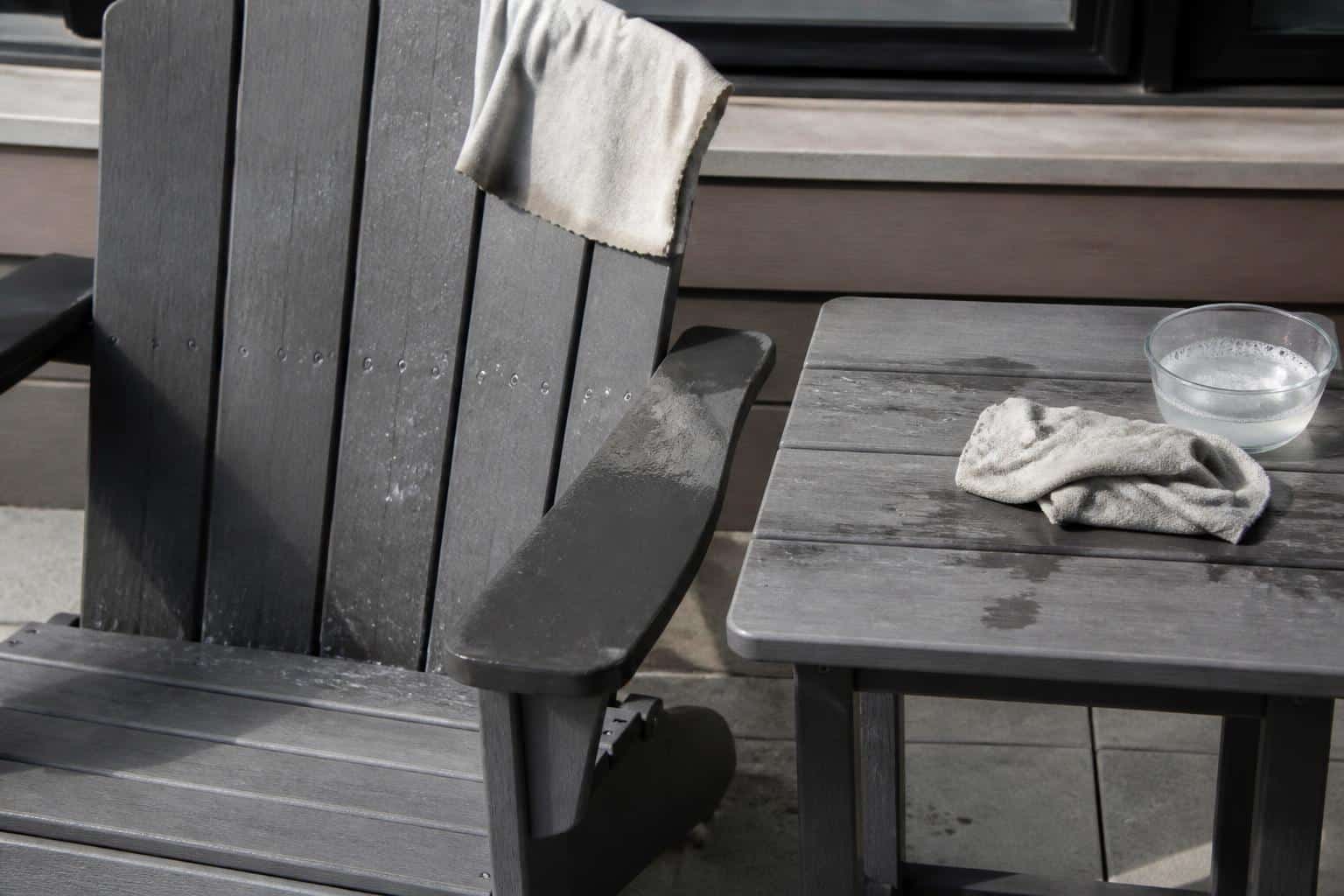
The safest way to begin is with the mildest practical option. Mix a small amount of gentle soap with water, dampen a soft cloth or sponge, and wipe an inconspicuous area first. This small test tells you whether the haze is loose surface residue or a more stubborn mineral film.
If the spot lightens right away, continue across the affected area with the same approach. If it does not change much, move to a slightly more targeted cleaner rather than increasing scrubbing pressure.
A patch test matters for two reasons. First, it helps confirm that your cleaner is actually addressing mineral residue. Second, it keeps you from overworking one area and creating uneven sheen. If you are caring for factory-direct outdoor pieces such as Adirondack seating, dining chairs, or side tables, a controlled test is a smarter move than treating the whole piece at once.
For general material information, you can also review the brand’s Marine Grade Polymer furniture page before tackling a full cleaning session.
A finish-conscious cleaning sequence that works
Once you have identified mineral spotting, follow a simple order: wash, test, rinse, repeat if needed, then dry. That sequence removes deposits while limiting unnecessary friction.
Start by brushing or wiping away loose debris. Dust and grit can act like an abrasive if you scrub through them. Next, clean the area with mild soapy water using a soft cloth, sponge, or non-abrasive pad. Work in small sections so you can see what is changing.
If the marks remain, try a mild spot-treatment approach on the mineral deposit rather than soaking the entire piece in stronger cleaners. Apply your chosen cleaner with a cloth, let it dwell briefly only if the product directions support that use, then wipe gently. Avoid letting cleaners dry on the furniture.
After each pass, rinse thoroughly with clean water. This step is easy to rush, but it is one of the most important parts of the process. Cleaner residue can leave its own film, and leftover minerals can redeposit if they are not fully removed. Finish by drying the surface with a soft towel to reduce new spotting.
If one round does not fully clear the surface, repeat the same mild sequence once or twice before trying anything more aggressive. Slow, even cleaning usually produces a better cosmetic result than one harsh attempt.
How to choose cleaners without making risky assumptions
Many people go straight to strong chemicals when they see white spotting. That is not always the best move. Product labels can make broad claims, but not every multipurpose cleaner, bathroom spray, scale remover, or solvent-based product is a good fit for outdoor furniture surfaces.
When selecting a cleaner, look for mild household options and avoid unsupported promises such as instant restoration, permanent sealing, or miracle stain removal. A cleaner that is appropriate for one surface in the home may be too aggressive for another. If you want a starting point for choosing gentler formulations, the EPA Safer Choice program offers a useful reference for consumer products at EPA Safer Choice.
Just as important, avoid treating all white marks as if they require acid-heavy descalers or industrial-strength removers. Hard-water spots vary in severity. A mild test-first approach reduces the chance of unnecessary surface stress.
If you own American Made outdoor furniture built for daily use, patient maintenance will usually serve you better than chasing the strongest bottle on the shelf.
What not to use on the surface
To protect appearance, skip tools and products that can scratch, haze, or chemically stress the finish. That means no steel wool, no stiff wire brushes, and no coarse sanding pads for ordinary mineral spots. These can leave visible abrasion patterns that are harder to live with than the original spotting.
It is also smart to avoid undiluted harsh chemicals unless the manufacturer specifically supports them for the exact use. Cleaner combinations can be especially risky. Mixing products in hopes of creating a stronger result is not a good maintenance strategy.
Another common mistake is pressing too hard with a scrub pad. Pressure does not always equal better cleaning. With mineral spotting, repeated light passes plus proper rinsing are usually more effective than grinding away at one patch.
If the furniture includes stainless hardware, such as the brand’s 3/16-inch stainless steel hardware, careful cleaning also helps keep surrounding surfaces looking even and free from accidental scuffing.
Rinsing and drying are half the job
One reason hard-water spots come back is that the final rinse and dry steps get skipped. If your water source itself carries a high mineral load, rinsing carelessly and letting the furniture air dry in full sun can recreate the same problem you just removed.
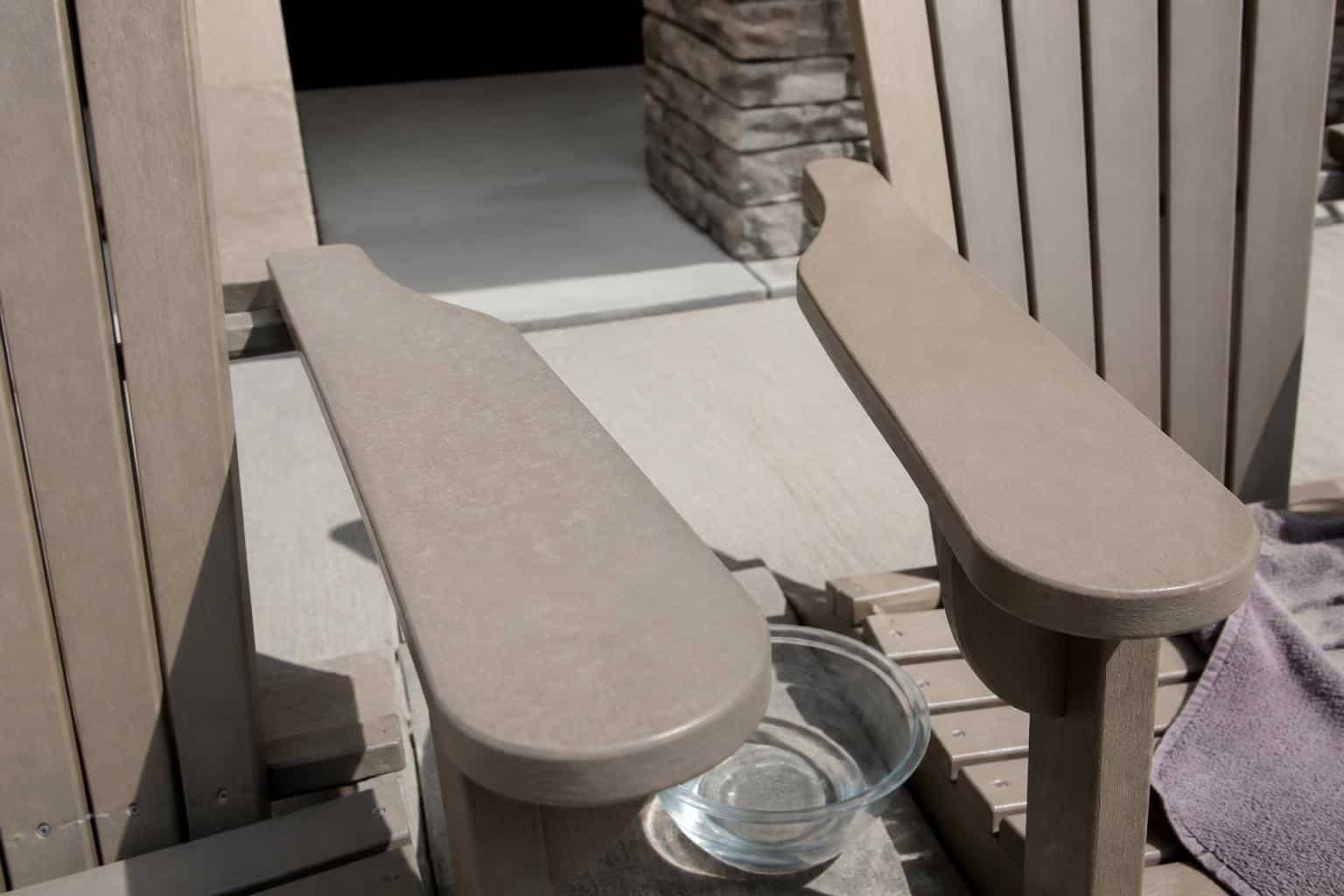
After cleaning, rinse with clean water in a controlled way rather than flooding the piece and walking away. Wipe away excess water with a soft, absorbent towel. Pay extra attention to flat arms, seats, table tops, and slats where droplets tend to gather.
This step is especially helpful on heavier outdoor pieces that often stay in place all season, such as the Hampton Adirondack Chair at 52 lb or Hampton round and square end tables at 15 lb each. Because these pieces may sit near irrigation patterns or pool edges for long stretches, drying them after washdowns can noticeably reduce repeat spotting.
Routine drying is simple, but it has an outsized effect on appearance. Think of it as maintenance that prevents another full cleanup next week.
How to prevent spots from building up again
Prevention is usually easier than removal. If sprinklers regularly hit your furniture, adjust the spray pattern when possible. If pool water splashes onto seating or tables, wipe the surface down after heavy use. After rain, a quick towel dry can help on horizontal surfaces that hold droplets longer.
Regular light cleaning also prevents minerals from layering over dust, pollen, and residue. Once buildup combines with other grime, spots can look darker, feel rougher, and take more effort to remove. A fast wipe every so often is more finish-conscious than waiting for a heavily crusted surface.
Placement matters too. Furniture kept under partial cover may experience less spotting than pieces in open spray zones. Even so, all-weather products still benefit from simple upkeep. Chairs such as an Armless Cafe Chair at 27 lb or a Counter Height Stool at 21 lb are easy to reposition briefly while you clean and dry the area around them.
If you are comparing product details or care expectations, the brand’s returns and warranty information is also worth reviewing. Plastic Furniture To Go offers free nationwide shipping, a 7-year structural warranty, and a 5-year fade warranty.
When a spot may be more than a mineral deposit
Sometimes a mark that looks like hard-water spotting is actually a different issue. Sunscreen residue, airborne pollution, food grease, smoke film, and certain landscape products can leave pale or sticky patches that do not respond the same way minerals do. If a mild soap wash removes some of the mark but leaves a shadow, you may be dealing with layered residue rather than a pure water spot.
A good clue is texture. Mineral deposits often feel chalky or crusty. Oily residue usually feels smoother or tackier. Another clue is pattern. Random dots and drip lines point toward evaporated water, while hand-shaped smears or circular tabletop marks may suggest lotions, cups, or spills.
If repeated mild cleaning does not improve the appearance, stop short of escalating into abrasive methods. A stubborn mark is not a reason to sand, scrape, or use harsh compounds automatically. It is a reason to reassess what the stain actually is and to use a more careful process.
Frequently Asked Questions
Can I use an abrasive scrubber for hard-water spots?
It is better to start with a soft cloth, sponge, or non-abrasive pad. Abrasive scrubbers can leave scratching or dullness that may be more noticeable than the original mineral spotting.
Should I let cleaner sit on the furniture for a long time?
Only follow the product directions for the cleaner you are using, and avoid letting cleaners dry on the surface. A short, controlled application followed by a thorough rinse is usually the safer approach.
Why do the spots return after I clean them?
They often come back when mineral-heavy water dries on the surface again. Sprinklers, splash-out, or air-drying after rinsing can all redeposit minerals. Thorough rinsing and towel drying help reduce repeat spotting.
Is hard-water spotting a structural problem?
Hard-water spots are generally a surface appearance issue, not a structural one. They are usually best handled with gentle cleaning and regular maintenance rather than aggressive repair methods.
Shop American Made outdoor furniture built with Marine Grade Polymer at Plastic Furniture To Go, or use the site to contact the team online if you want help choosing pieces for easy everyday care. With free nationwide shipping, it is simple to find durable furniture that is practical to maintain.

