
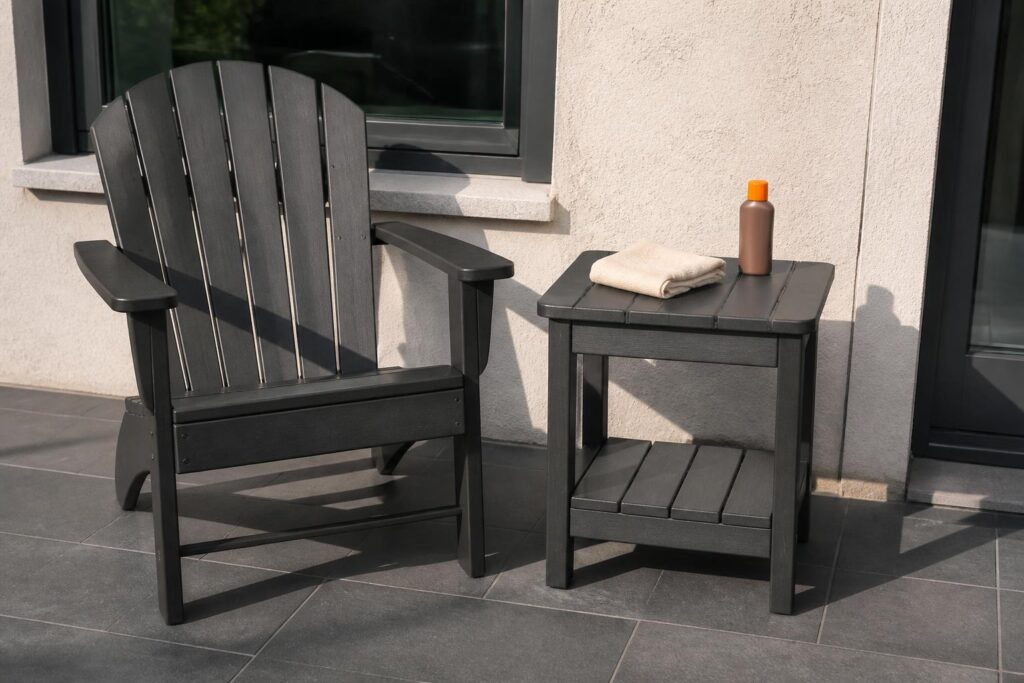
To clean sunscreen from plastic patio furniture, start by checking the care instructions for the exact product and finish. A lotion mark can look like a cloudy patch, a greasy smear, or a change in sheen, but its appearance alone does not tell you which cleaner is compatible. Identify the piece, note what spilled, and choose a method the maker permits before treating a large visible area.
This guide walks through a practical cleanup decision: inspect the mark, check the instructions, test an approved method in a small inconspicuous area, and review the result before continuing. PFTG identifies its furniture material as Marine Grade Polymer. That material name by itself does not establish a suitable cleaning chemical, dilution, contact time, brush, or pressure setting.
For the specifications of the chair discussed in our care guides, see the Hampton Adirondack Chair.
Identify the residue before choosing a cleaner
Look at the affected area in good light and note when the mark appeared. Was there a fresh spill, repeated contact with sunscreen-coated arms, or an unknown residue left after a gathering? Photograph the area before treatment, including a close view of the mark and a wider view that identifies the piece. Keep the sunscreen container or product name if you know which lotion was involved.
Distinguish a surface deposit from possible damage before you scrub. A visible mark may have more than one cause, and a photograph cannot always settle the question. If the finish already appears scratched, discolored, or damaged, ask the seller how to assess it. Avoid starting several treatments at once; that makes it harder to tell which step changed the surface.
Check nearby hardware, joints, cushions, and accessories as separate parts of the cleaning decision. The method permitted for a seating surface may differ from the instructions for a cushion or another attached item. Keep the complete assembly in mind when deciding where water or cleaner might travel.
Confirm a compatible cleaning method
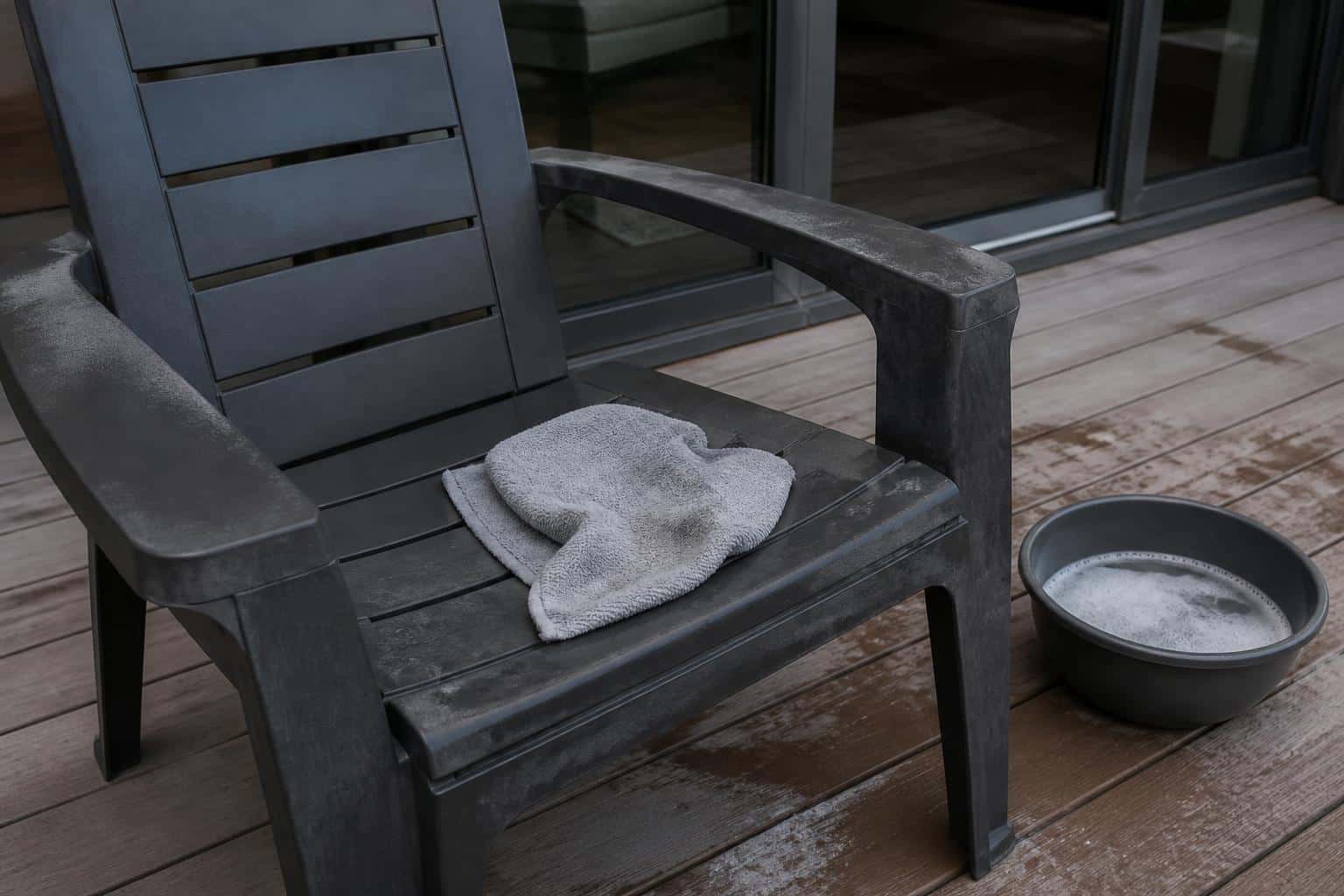
Find the product instructions supplied with your furniture or ask the seller for current care guidance. Describe the model, finish, residue, and any cleaning already attempted. A useful question is specific: “This sunscreen left this mark on this model; which cleaner and method do you permit?” Include photos if the seller requests them through an appropriate support channel.
If the instructions permit soap and water, use the specified type and method. Do not assume that every dish soap, household cleaner, or concentration is interchangeable. Check the cleaner label and follow the maker’s directions for application, contact time, rinsing, and drying. Where an instruction is missing, ask before improvising a stronger solution or longer treatment.
The EPA Safer Choice product search provides information about cleaners that meet that program’s standard. It does not certify that a cleaner is compatible with a particular furniture model or finish. Use it as background alongside the furniture instructions, rather than as permission to apply a product.
Never mix cleaning products. Do not use bleach, solvents, abrasive pads, scraping tools, or a pressure washer unless the instructions for the exact product allow that method. A general article cannot establish a safe chemical concentration, nozzle distance, or pressure setting for your piece.
Test the approved method before treating the mark
Once you have a compatible method, test it on a small inconspicuous area first, following the same directions you would use on the visible mark. Protect nearby items as instructed and keep cleaning materials away from children and pets. Check the area after any required rinse and drying time, rather than judging only while the surface is wet.
Compare the test area with an untreated section in similar light. Look for a change in color, sheen, texture, or appearance around a joint. If the treatment changes the surface in an unwanted way, stop and contact the seller before applying it elsewhere. A successful small test is useful information, but it is not a guarantee that every stain will disappear.
Keep a short record of the cleaner, method, and result. If you later need assistance, that record is more useful than a list of products you vaguely remember trying. It also helps another person who cares for the patio follow the same instructions instead of starting over with an unfamiliar treatment.
Clean the affected area and reassess
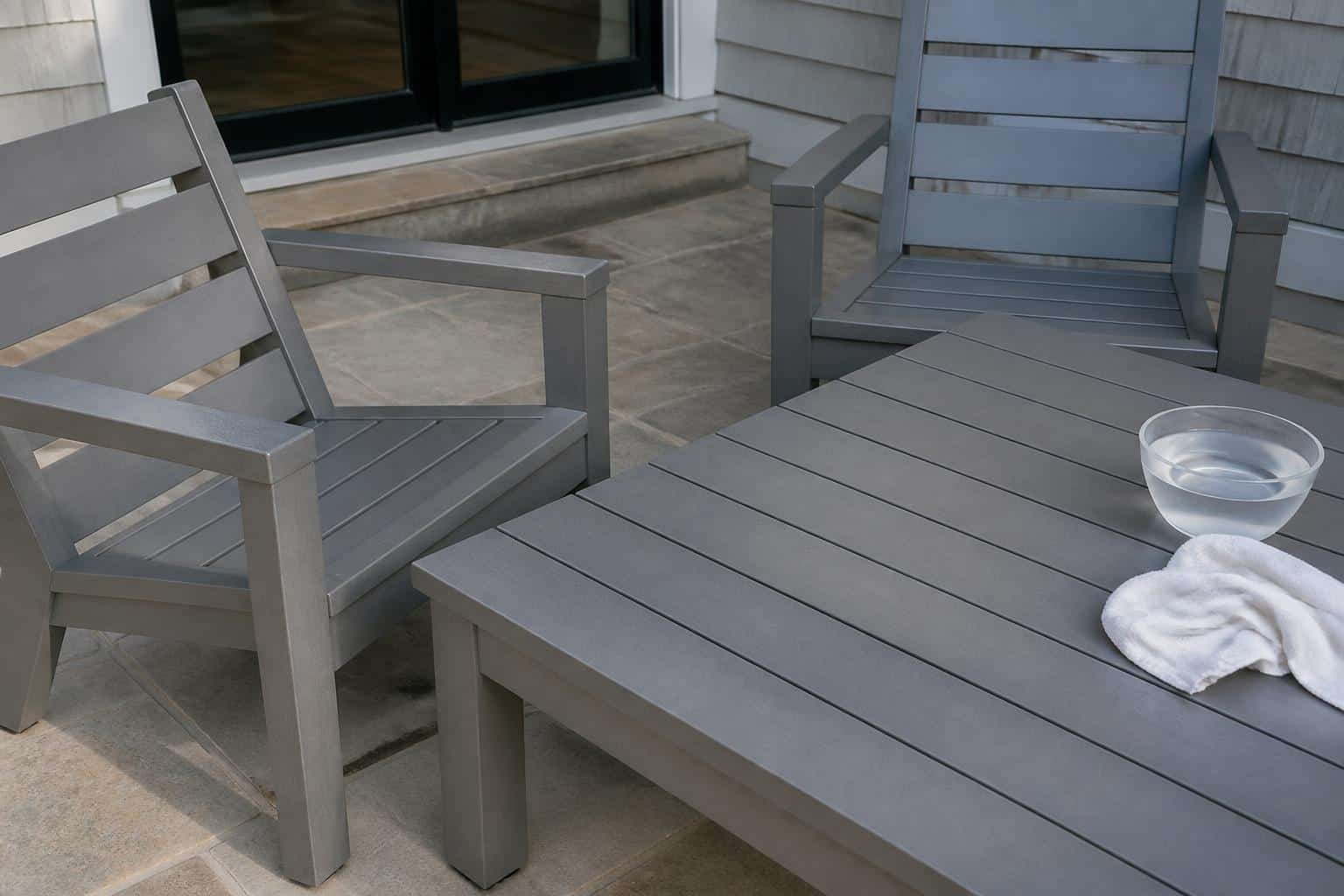
Follow the approved directions for the affected area, including any instructions for removing excess residue, applying cleaner, rinsing, and drying. Work within the permitted contact time and avoid increasing force simply because a mark remains visible. Use only the tools allowed for the product and finish.
Inspect the result after the surface has dried as directed. If a mark remains, check whether the instructions permit another application. Do not automatically increase the concentration, mix in another chemical, or move to a harsher tool. Send the seller your before-and-after photos and treatment record if you need help deciding what to do next.
Plan safe handling before moving furniture for cleaning. A Hampton Adirondack Chair weighs 52 pounds, an Armless Cafe Chair 27 pounds, a Counter Height Stool 21 pounds, and each Hampton end table 15 pounds. These figures help you arrange any assistance needed; they do not mean that every person can easily move every piece. Keep the working area and access route clear.
For ongoing care, keep the instructions where the person responsible for cleaning can find them. Check seating and table surfaces after use and deal with residue using the permitted method. Use sunscreen according to its label; furniture care should not discourage appropriate sun protection. If you add cushions or covers, follow their separate use and care instructions as well.
Frequently asked questions
Can I use dish soap to remove sunscreen?
Use it only if the care instructions for the exact furniture and finish permit it. Follow the specified method and the cleaner label, and test an approved treatment in a small inconspicuous area first.
Should I scrub harder if a mark remains?
Follow the permitted method instead of increasing force or changing tools without guidance. Stop if the surface changes unexpectedly, and ask the seller before trying a stronger treatment.
Does a warranty cover a sunscreen mark?
Read the written warranty and ask about the particular issue. PFTG publishes seven-year structural and five-year fading coverage; those durations do not establish whether a specific stain or treatment is covered.
What information should I provide when asking for help?
Include the furniture model, order information, photos of the mark, the sunscreen product if known, and any treatment already used. Use the contact form for a PFTG care question before proceeding with an uncertain method.

