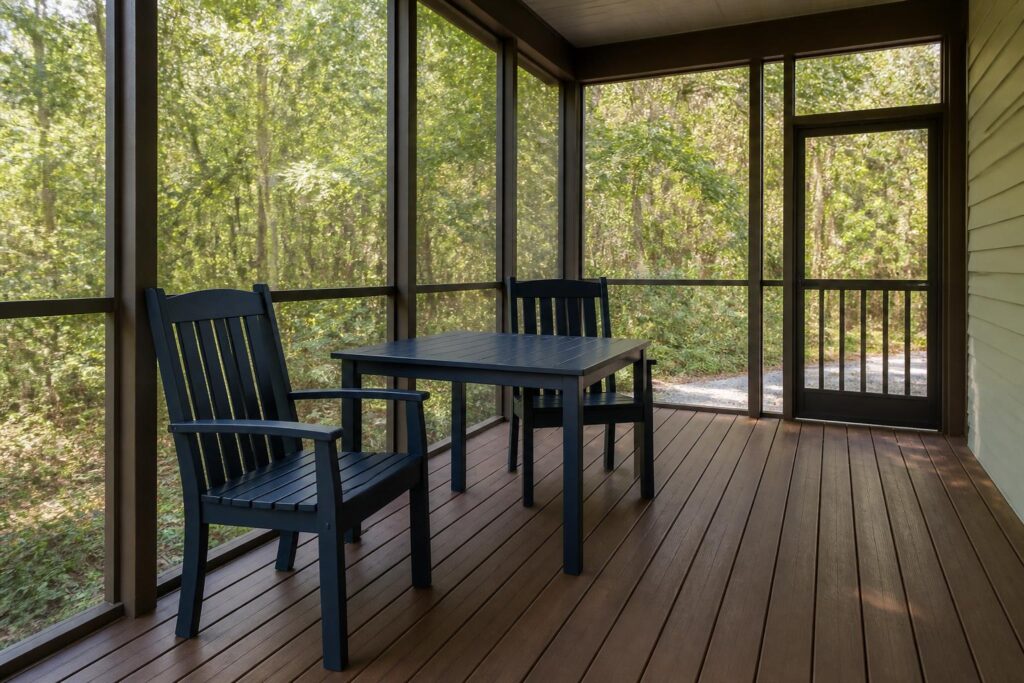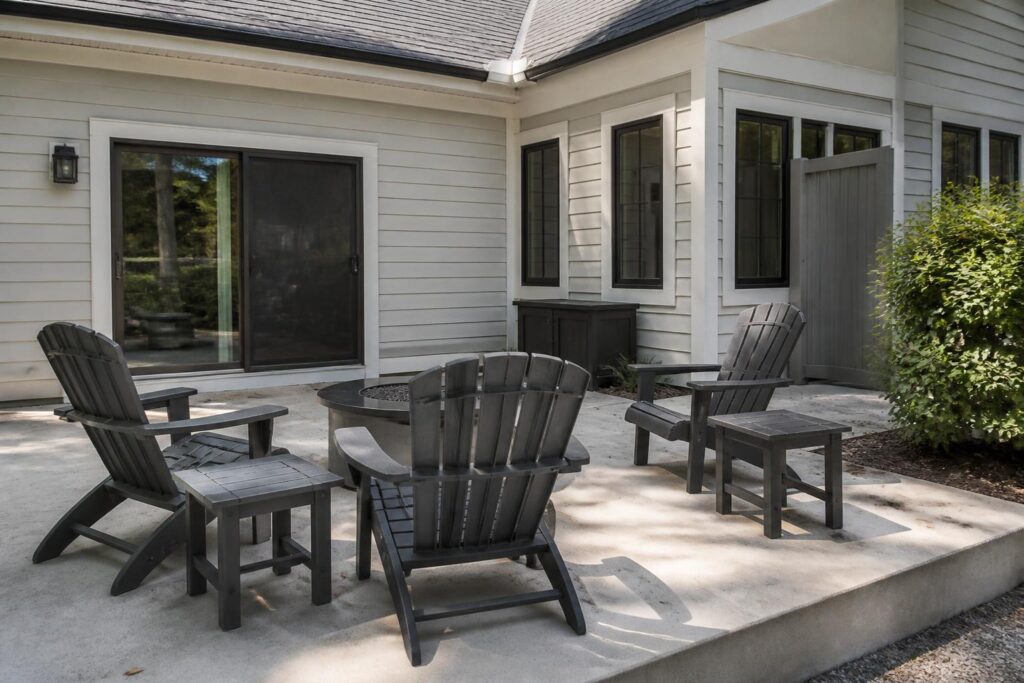
Choosing patio furniture for second homes is different from buying for a primary residence. When you are away for weeks or months at a time, your outdoor setup needs a practical plan behind it, not just a good look on day one.
The goal is simple: compare dimensions, handling needs, care instructions, and a storage plan. Create a written routine for inspections and seasonal preparation, including the instructions for each piece. Our Marine Grade Polymer guide explains the published specifications to check before choosing furniture.
Start with ownership realities, not decorating ideas
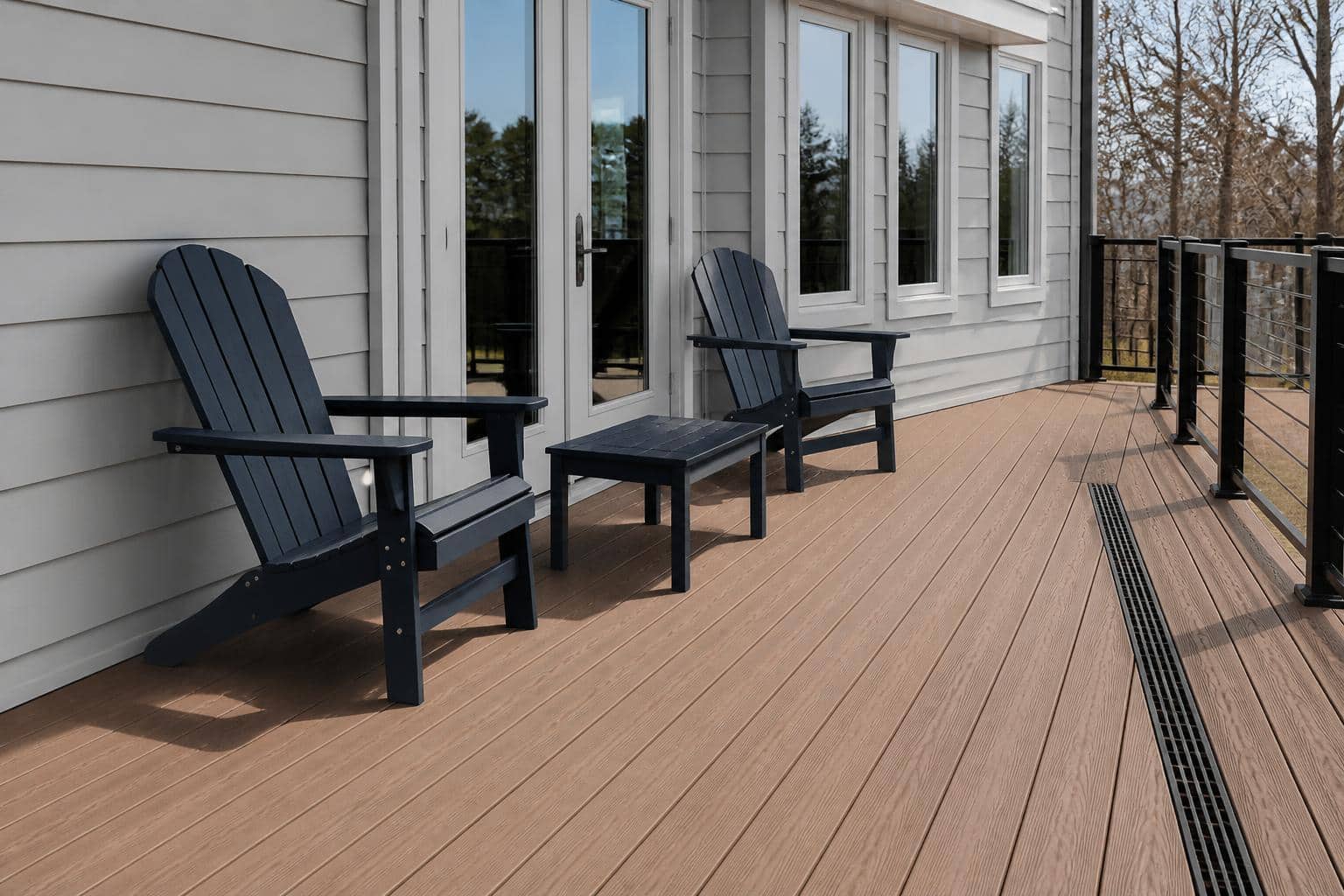
A second home often has long quiet stretches between visits. That changes how you should think about outdoor furniture. Instead of focusing first on styling, start with the actual conditions of absentee ownership:
How often will someone check the property? Are loose items likely to be exposed to high winds? Will rainwater collect in low spots on the patio? Is there a covered area or garage for temporary storm storage? Who will receive a delivery if you are not there?
These questions shape smarter furniture decisions. A beautiful patio arrangement is still a poor fit if it requires constant cushion maintenance, frequent tightening, or complicated storage steps. For a second home, the best setup is the one that remains orderly and usable with minimal intervention.
Count the separate pieces and accessories in your proposed arrangement, and list the care and storage instructions for each. Use that inventory to decide whether the setup fits the time and help available at the property.
Compare material, hardware, and care instructions
For a second home, compare the exact product’s dimensions, handling needs, care instructions, storage plan, and written coverage. Choose a routine a local contact can follow between visits.
Plastic Furniture To Go furniture is American Made and uses 3/16-inch stainless steel hardware. Record those published specifications with the product’s care and inspection instructions when planning absentee ownership.
The warranty is another practical point to keep in mind. The brand offers a 7-year structural warranty and a 5-year fade warranty. You can review the details at Returns and Warranty. For second-home owners, clear warranty terms are part of the planning process. They help set expectations before you buy and support a more organized ownership routine afterward.
Before buying, make sure the product instructions are available to the person who will look after the property. Ask the seller about any care or warranty question that affects your planned use.
Plan around loose pieces before weather makes the decision for you
Absentee owners should think carefully about loose outdoor items. A second home can look polished with end tables, side chairs, and stools, but each movable piece needs a plan when no one is around.
Known product weights can help you build that plan. A Hampton Adirondack Chair weighs 52 pounds. An Armless Cafe Chair weighs 27 pounds. A Counter Height Stool weighs 21 pounds. Hampton round and square end tables weigh 15 pounds each.
Use those weights to plan handling, including any help needed to move a piece safely. Assess every item for storage or appropriate securing; the numbers do not establish wind resistance.
Review every loose chair, table, stool, and accessory before extended absences. Give each item a storage or manufacturer-approved securing plan; product weight does not establish wind resistance.
Create a written checklist for your property manager, neighbor, or maintenance contact. For example:
Before a named storm threat or a long absence, follow local alerts and the exact product’s storage or securing guidance. Record where every loose item goes and who is responsible for the plan.
If your property is in a hurricane-prone region, build your storm routine from official guidance such as NOAA hurricane preparedness. The key is to connect that general weather planning to your specific patio layout so there is no guesswork when conditions change quickly.
Keep drainage and surface layout part of the furniture plan
One of the easiest mistakes at a second home is treating the patio as a static display. In reality, outdoor furniture interacts with drainage, leaves, pollen, and windblown debris every day while you are gone.
Walk the space and identify where water tends to sit after rain. Then avoid placing furniture in those trouble spots if you can. Low corners, areas below roof runoff, and spaces near clogged drains often collect debris that makes the patio look neglected faster than it really is.
Try these layout habits:
Leave a little breathing room around seating groups so someone can sweep or rinse the area during an inspection visit.
Do not crowd drains, scuppers, or threshold areas with stools or end tables.
Place the most frequently moved pieces where they are easiest to gather and store.
Use a simple furniture map so anyone helping at the property can reset the patio correctly.
Good layout does not just improve looks. It supports the kind of quick maintenance that absentee ownership requires. If an inspection visit only lasts 20 minutes, an easy-to-read arrangement makes a big difference.
Build a realistic inspection routine for vacant periods
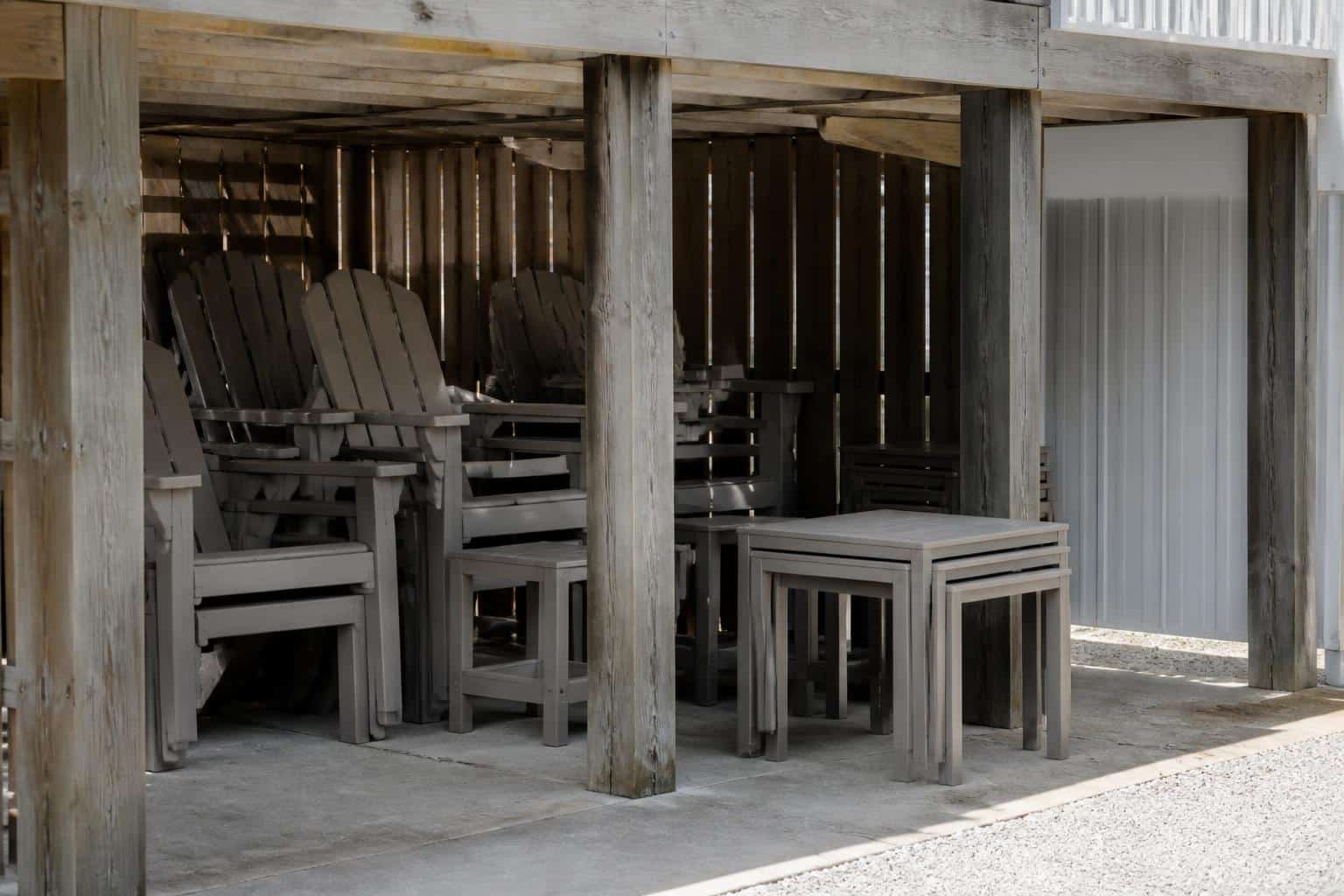
Second-home patio care works best when it is written down. Memory is unreliable, especially when a property is used seasonally or shared among family members. A short recurring checklist is much more useful than a long mental to-do list.
Your inspection routine can be simple. During each visit, ask the person checking the property to look for:
Furniture that has shifted out of place.
Loose smaller items that should be stored.
Debris buildup behind chairs, under tables, or near doors.
Standing water around patio edges and drains.
Visible hardware issues or unusual movement in any piece.
Surface dirt that can be handled with basic cleaning.
This does not need to become a major maintenance event. The point is to catch small issues before they turn into a frustrating surprise at the start of your next stay. Even a quick visual review can keep your outdoor area much more guest-ready.
It also helps to store a printed version of the checklist inside the home, especially if multiple people may handle property visits over the course of a year.
Think through delivery timing before the home sits empty
Delivery planning is often overlooked with second homes. A factory-direct purchase with free nationwide shipping is convenient, but you still need a receiving plan if the property will be vacant.
Before ordering, think through the timing of your next stay, any planned maintenance work, and who can access the property if needed. If the furniture arrives during a vacant window, make sure there is a reliable person assigned to receive, inspect, and place items where they belong.
It is also smart to review the brand’s Shipping Policy in advance so expectations are clear before purchase. This is especially important when you are coordinating around HOA schedules, rental turnovers, or seasonal travel dates.
Check the shipping estimates before choosing an order date, and allow for carrier delays. Arrange for someone to receive and inspect the shipment if you cannot be there. A shipping estimate does not guarantee arrival on a particular day, so avoid relying on a narrow travel window.
Create a severe-weather storage script, not just a general intention
Saying you will “put things away if a storm is coming” is not a real plan. Absentee ownership needs a storage script with clear instructions that another person can follow without calling for clarification.
Your script should answer a few basic questions:
What is the storage or appropriate securing plan for every loose item?
Where does each piece go?
Who can carry out the plan safely before severe weather?
What local alerts trigger preparation?
Who checks the property when it is safe to return?
Use labelled photos or a simple floor plan to identify every item and its intended storage location. Keep paths, doors, and access gates clear. Check that the person responsible can move the furniture safely, and complete preparations before conditions make outdoor work dangerous.
If your second home is also a rental property, share these instructions with the people responsible for its care. Make responsibilities clear between visits, including who checks local alerts and who confirms that preparations are complete. Guests should know whom to contact if they notice damage or a loose connection.
Keep care simple enough that it actually gets done
Keep the written routine practical and complete: follow product-specific care and inspection instructions, check every loose item, and maintain a clear storage plan. Match responsibilities to the help available at the property and update the instructions when furniture or local requirements change.
It also helps to limit how many separate categories of outdoor items you own. The more accessories, textiles, and lightweight extras you add, the more tasks you create during every inspection and weather event. For a second home, a calmer setup is often the smarter one.
Choose a layout that is practical to inspect, clean, and put away when needed. Record the furniture dimensions, handling arrangements, product instructions, and the person responsible for each step. Clear instructions help whoever looks after the property carry out the plan while you are away.
Frequently Asked Questions
How often should patio furniture be checked at a second home?
That depends on your location and season, but a regular visual check during vacancy is a smart baseline. The goal is to spot shifting, debris buildup, standing water, or loose smaller items before your next stay.
What furniture pieces usually need the most attention before a long absence?
Review every loose item before an absence. The published end-table and stool weights can help plan safe handling, but do not establish a storm-storage priority or wind resistance.
Is Marine Grade Polymer a good fit for a vacation property?
Marine Grade Polymer is PFTG’s published material specification. For a second home or seasonal property, compare the exact product’s care instructions, storage plan, handling needs, and written coverage before ordering.
What is the easiest way to keep the patio ready for guests or family?
Create a short written routine with photos. Include furniture placement, basic cleaning steps, drain checks, and severe-weather storage instructions. A simple checklist is easier for anyone to follow during a quick property visit.
Shop the current collection to compare published product details, or use the contact form for a question about a particular piece and your intended setup.