
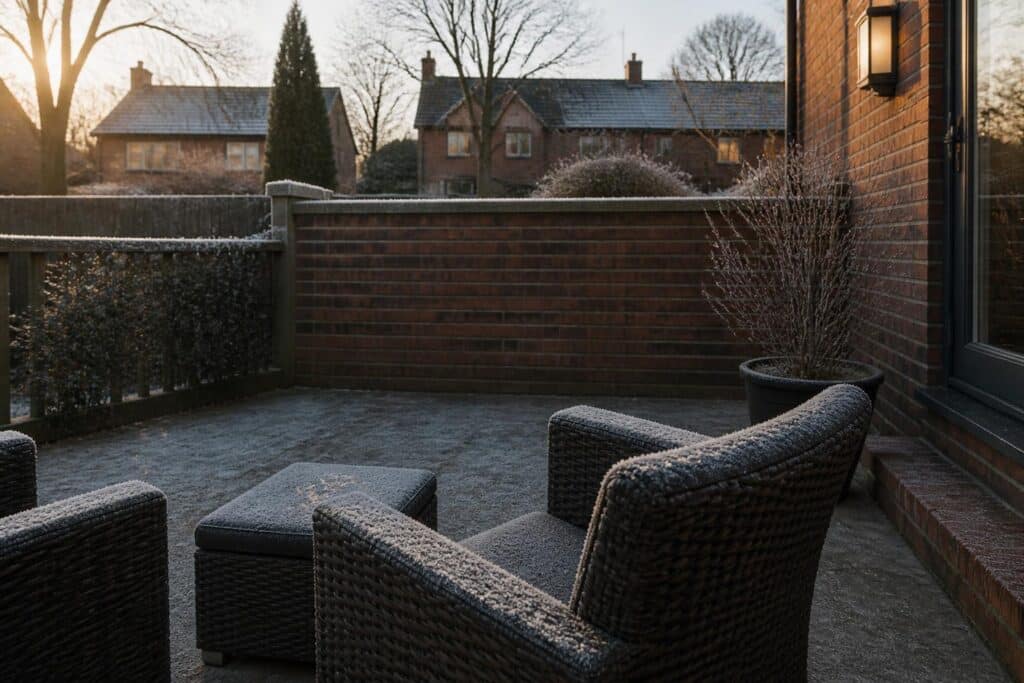
If you’ve ever stared at your patio in November wondering whether you really need to haul everything into the garage before the first hard freeze, you’re asking the right question. Can plastic furniture stay outside in winter without cracking, fading, or blowing across the yard? The short answer is usually yes, with a few sensible precautions. This guide walks you through how modern outdoor plastic handles cold, what actually causes winter damage, how to anchor and position pieces for a rough season, when a cover earns its keep, and how spring cleanup looks if you leave everything in place.
How Plastic Outdoor Furniture Behaves in Cold Weather
Not all plastic patio furniture is engineered for the same climate. The category ranges from thin, injection-molded resin chairs you’d find stacked at a big-box store for $25 to solid poly lumber pieces built plank-by-plank like traditional wood furniture. Their winter performance is worlds apart.
Thin, hollow resin furniture becomes brittle as temperatures drop. Once the material chills below roughly 20°F, a sudden impact — a dropped snow shovel, a tipped chair, even sitting down too hard — can crack a leg or split a seat. UV exposure over previous summers accelerates this because sunlight breaks down inexpensive resin over time, and cold reveals that weakness.
Solid poly furniture, sometimes called HDPE lumber or recycled plastic lumber, behaves very differently. The material stays dimensionally stable across a wide temperature range, typically rated for use from well below zero up into triple digits. It won’t absorb water, so freeze-thaw cycles that destroy wood aren’t a concern. Snow simply sits on it and melts off.
The practical takeaway: know what you own. If your chairs flex noticeably when you pick them up, treat them gently in winter. If they feel dense, solid, and heavy — closer to lumber than to a laundry basket — they’re built to shrug off the season. When you shop, ask about cold-weather ratings and look for solid construction rather than thin walls.
What Actually Damages Furniture Left Out All Winter
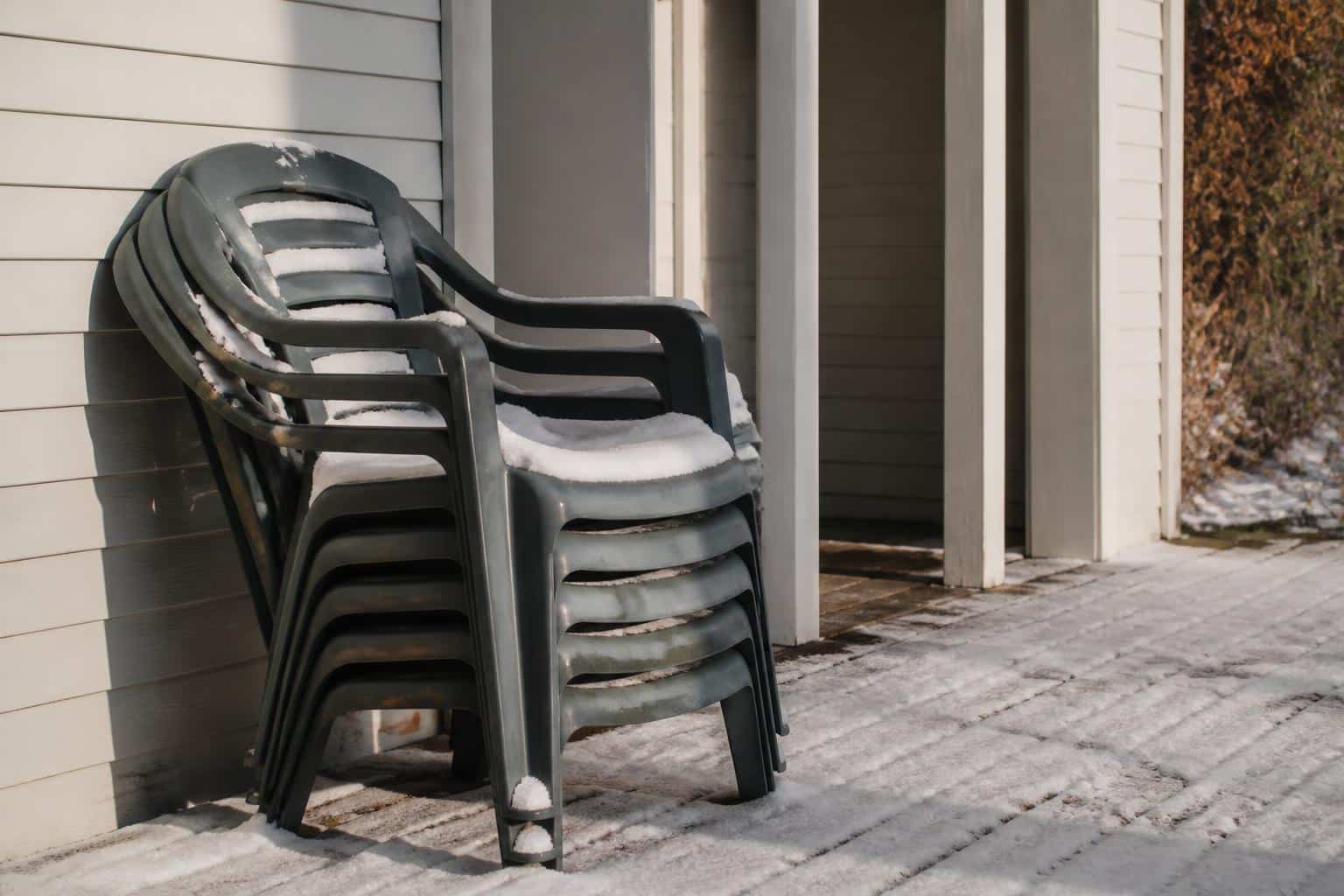
Cold itself is rarely the villain. The real culprits are wind, weight loads from snow and ice, standing water in the wrong places, and abrasion from debris. Understanding each helps you decide what to protect and what to leave alone.
Wind is the biggest threat to lightweight pieces. A 40 mph gust can send a stackable chair tumbling into a fence, a grill, or a neighbor’s window. Even heavier furniture can slide across a smooth deck when it’s coated in ice. Winter storms in many regions bring sustained winds above 30 mph, and the National Weather Service regularly issues wind advisories when gusts exceed 45 to 57 mph — plenty to move a chair.
Snow and ice loads are usually not a problem for tables and chairs designed for outdoor use, but ice that pools in cupholders, seat depressions, or between slats can pry apart poorly assembled joints as it expands. Water expands about 9% when it freezes. Well-built poly furniture is engineered around this reality with drainage gaps between slats.
Debris abrasion — wind-blown branches, gravel from ice-melt operations, and even leaves that pack under legs and hold moisture — can leave scuffs. Cosmetic, but worth noting if a piece sits under a tree.
For guidance on preparing outdoor spaces for severe weather, the National Weather Service’s wind safety resources are a solid starting point. If you’re in a region that sees ice storms or heavy snowfall, plan around those events, not around average temperatures.
Positioning Furniture for a Rough Season
How you arrange furniture before winter matters more than most people realize. A little thought in November saves a lot of cleanup in March.
Move Pieces Away From Falling Hazards
Look up before you decide where to park chairs for the season. Dead limbs, ice-loaded branches, and roof-shed snow can all cause damage. Aim for at least 8 to 10 feet of clearance from tree canopies where you can, and avoid parking anything directly under roof valleys where snow slides off in sheets.
Group and Anchor Against Wind
Chairs pushed tightly against a table, or nested against a wall on the leeward side of the house, ride out storms far better than pieces scattered across an open lawn. If you have a covered porch, tuck lightweight items into the interior corner. On exposed decks, consider looping a length of paracord through chair frames and around a railing post — enough to keep a gust from carrying anything airborne.
Lift Legs Off Standing Water
Repeated freeze-thaw around chair legs sitting in puddles doesn’t hurt solid poly, but it can stain lighter colors with tannins from wet leaves. Move furniture to the highest, best-draining spot on your patio. Flip lightweight chairs onto tables so their seats don’t fill with slush and refreeze night after night.

Covers, Storage, and When Each Is Worth the Effort
The question of whether to cover, store, or simply leave outdoor plastic furniture in place comes down to three variables: the quality of the furniture, the severity of your winters, and how the space looks to you during the off-season.
Leave it out uncovered. This is the right call for solid poly furniture in most climates. It’s engineered to handle UV, precipitation, and freeze cycles without any intervention. A quick sweep with a broom after each snowfall keeps things tidy, but nothing more is required. You also avoid the mildew that can grow under a trapped, damp cover.
Use fitted covers. Covers make sense if you want to keep pieces cleaner through the winter, if you have piles of pine needles or oak leaves that stain, or if you simply don’t want to look at furniture on a bare patio. Choose breathable covers with vents and elastic hems. Avoid wrapping furniture in plastic sheeting or tarps that trap condensation — that traps more moisture than it blocks.
Move it into a shed or garage. Reserve full storage for lightweight resin chairs that could blow around, cushions and pillows that will absolutely get ruined outdoors, and anything you’d feel sick about replacing. If you have a covered but unheated shed, that’s ideal. Attics get too hot in shoulder seasons; damp basements grow mildew.
If you’re weighing whether it’s time to replace older, brittle chairs before winter with something built to stay out year-round, the full collection is a good place to compare styles and colors. Our outdoor living guides also cover material choices in more detail.
Cushions, Pillows, and Small Accessories
The furniture frame is one question; the soft goods are another entirely. Even the toughest outdoor fabrics have a shorter useful life if they spend December through March soaking up snow and thawing repeatedly.
Bring cushions indoors — a hall closet, a storage bench, or a bin in the garage all work. If you don’t have space, invest in a deck box rated for outdoor use with a gasketed lid. A 120- to 150-gallon box holds cushions for a four-chair set plus a couple of throw pillows. Look for boxes with internal supports so wet snow on the lid doesn’t cause it to bow inward.
Small accessories deserve the same treatment: ceramic planters that can crack when soil freezes, terracotta pots almost guaranteed to split, glass hurricane lanterns, and any decor with metal parts that will rust. Move them in October or early November before the first hard freeze.
If your outdoor rug is polypropylene, it can generally stay put through winter, though it will last longer if you roll it up, secure it with bungee cords, and stand it upright in a garage. Rugs left flat on a wet deck can trap enough moisture underneath to stain composite decking or promote wood rot.
Spring Cleanup After a Winter Outside
Come spring, furniture that stayed outdoors usually needs nothing more than a rinse. Here’s a practical sequence that takes about an hour for a full patio set.
- Sweep or brush off loose debris — leaves, twigs, pollen, cobwebs.
- Hose everything down with a standard garden nozzle. Skip pressure washers on plastic; they can force water into joints and pit softer surfaces.
- Mix a mild cleaner: about one tablespoon of dish soap per gallon of warm water. For tougher grime or mildew spots, a solution of one part white vinegar to three parts water works well.
- Scrub with a soft-bristle brush, focusing on grooves between slats and any spots where debris packed in over the winter.
- Rinse thoroughly and let air-dry in the sun for an hour before putting cushions back.
Inspect hardware while you’re at it. Even on well-built furniture, occasional stainless bolts benefit from a quick check — snug them if they’ve backed off a quarter turn over the season. If you notice any structural issues on a piece from Plastic Furniture To Go, reach out through the contact page; our furniture carries a 7-year structural warranty and a 5-year fade warranty.
Frequently Asked Questions
At what temperature does plastic furniture become unsafe to sit on?
Cheap, thin resin furniture becomes noticeably brittle below about 20°F and shouldn’t be sat on aggressively when it’s that cold — a sudden load can crack a leg. Solid poly lumber furniture stays flexible and safe across a much wider range, generally down to well below zero. If you’re unsure what you own, wait for temperatures to climb into the 40s before regular use, and always sit down gently on any cold outdoor chair.
Will snow piled on my chairs damage them?
For well-built poly and HDPE furniture, no — snow simply sits on the seat and slats until it melts or you brush it off. The slats are designed with drainage gaps so meltwater doesn’t pool. For thinner resin chairs, heavy wet snow (which can weigh 15 to 20 pounds per cubic foot) may stress weak joints. Knock snow off after storms with a soft broom, never a metal shovel that could gouge the surface.
Do I need to cover my furniture if I have solid poly patio pieces?
Not for protection purposes. Solid poly is engineered to handle UV, rain, snow, and freeze-thaw cycles without covers. Some people still cover furniture over winter to keep it visually cleaner or to reduce spring cleanup from tree debris. If you do cover, use breathable, vented covers rather than tarps or plastic sheeting, which trap condensation and can promote mildew growth against the furniture surface.
Can I leave an end table out with a potted plant on it all winter?
The table itself is fine outside. The pot is the concern. Terracotta and unglazed ceramic almost always crack when the soil inside freezes and expands. Move plants to sheltered locations or transfer them to plastic or fiberglass pots rated for freezing. If you must leave a ceramic pot in place, empty the soil, flip the pot upside down, and store it on the table under a breathable cover to shed rain and snow.
Winter doesn’t have to mean an empty patio or a garage packed with stacked chairs. Choose furniture built to handle the season, tuck lightweight pieces out of the wind, and bring in the soft goods — that’s most of what it takes. If you’re rebuilding a patio set with pieces designed to stay out year-round, browse the Plastic Furniture To Go collection for American-made, factory-direct chairs and tables shipped free anywhere in the country. Questions about a specific piece or how it will perform in your climate? Send them through our guides page and we’ll help you sort it out.

