

If you’re weighing outdoor furniture options and wondering how long plastic outdoor furniture lasts, the honest answer is that there is no single verified lifespan for every product sold under that label. Material, construction, climate, care, and daily use all matter. This guide explains how to compare those factors, what written warranty coverage actually tells you, and which quality signals are more dependable than a broad year-range promise.
What “Plastic” Actually Means in Outdoor Furniture
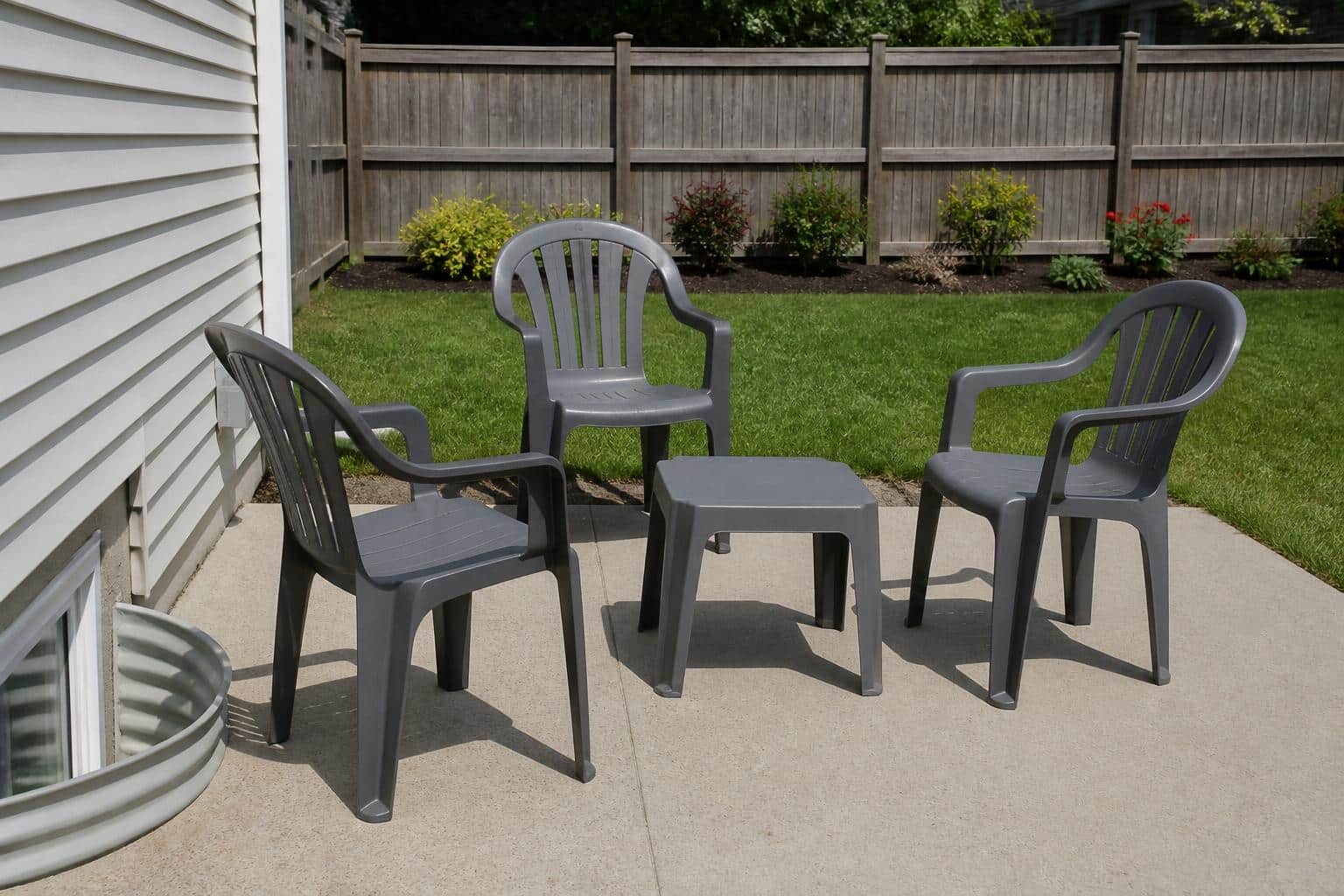
The word “plastic” covers a huge range of products, and the differences matter enormously when you’re trying to estimate how a piece will perform outdoors. Thin, injection-molded polypropylene stack chairs are inexpensive and lightweight, but their construction and UV protection vary. Inspect the product specifications and written coverage instead of assuming a precise service life from the material label or price alone.
Hollow-body resin furniture is another broad category, often molded to imitate wicker or wood. Wall thickness, UV stabilizers, reinforcement, and joint design vary by manufacturer, so the construction details matter more than the generic word “resin.”
Plastic Furniture To Go describes its furniture material as Marine Grade Polymer and specifies stainless steel hardware. Those are the approved product terms to use when comparing its catalog. For any other brand, verify the exact material, construction, hardware, and finish on that seller’s product page rather than assuming all poly furniture is built the same way.
Different products sold under the same broad label can have different designs, exposures, and care needs. That is why an unsourced lifespan range is not a reliable basis for choosing your particular chair.
The Real Enemies of Outdoor Furniture Longevity
Understanding what breaks outdoor furniture helps you predict how any given piece will age. Four forces do most of the damage, and each affects different materials differently.
Sun exposure is one factor to consider, but a general UV source cannot verify a furniture formulation or fading timeline. The EPA sun-safety information covers human exposure. Use the furniture maker’s care guidance and written coverage for the product itself.
Thermal cycling – the daily expansion and contraction as surfaces heat up in sun and cool at night – can stress joints, fasteners, and materials. Construction quality and the manufacturer’s published care guidance help you judge how a specific piece is intended to handle those conditions.
Moisture, temperature changes, and existing damage should be considered with the complete item’s care instructions. Do not assume that Marine Grade Polymer, wood, metal, or another label establishes how every finished piece will respond to winter conditions.
Mechanical stress from wind, being dragged across patios, and daily sitting adds up. Weak leg-to-seat connections or under-sized hardware may loosen sooner than a well-supported, properly assembled joint, regardless of the main material.
A well-built poly piece is designed to resist these conditions. Instead of relying on one universal lifespan estimate, compare the construction, care guidance, and written warranty for the specific product you are considering.
What Written Warranties Actually Tell You
Written warranty language is more useful than an unsupported lifespan estimate because it defines what the manufacturer actually covers, for how long, and under which conditions.
Read what structural and fading coverage actually mean in each policy. Identify covered components, exclusions, duration, proof requirements, and the claim process. Neither coverage should be paraphrased as a guarantee that furniture cannot break or change color.
PFTG publishes seven-year structural and five-year fading coverage. Compare those terms with the exact policies offered by other sellers. A shorter or longer headline term is not proof of the maker’s confidence or the product’s expected service life.
You can review the full returns and warranty terms before ordering to see exactly what’s covered and what isn’t. Key questions to ask about any warranty: Is it transferable? Does it cover commercial use? What’s the process to make a claim? Are shipping costs for replacements covered? A warranty is only as good as the company standing behind it, so a clearly written, straightforward policy generally beats vague marketing language about “lasting quality.”
Warranty Numbers Aren’t Everything
A long warranty does not replace careful review of construction and exclusions. Treat written coverage as a defined commitment, not as a promise that every piece will last a particular number of years beyond it. Actual service life depends on the product, environment, use, and care.
Quality Signals You Can Spot Before Buying
Since you usually can’t put a chair through a five-year test before purchasing, you have to read quality signals from the product description, photos, and specs. Here’s what to look for.
- Construction details. Ask for dimensions, assembly information, and any product-specific testing relevant to your intended use. Do not prescribe a universal slat thickness or infer safe loading from appearance.
- Hardware. Plastic Furniture To Go specifies stainless steel hardware. When comparing any outdoor piece, check the published hardware specification rather than assuming a particular alloy grade that the seller has not documented.
- Connections. Compare the documented assembly method, hardware, inspection guidance, and replacement-part options. A type of joint alone cannot establish how many years the finished piece will last.
- Color throughout. Solid-color poly lumber shows the same color on cut ends and edges as on the face. Surface-coated products reveal a different substrate color when scratched.
- Product weight. Use the actual furniture weight to plan handling, storage, and movement. It is separate from shipping weight, tested load capacity, and wind resistance.
- Country of origin and support. Confirm where the product is made, how customer support is provided, and whether replacement parts are currently available. Treat any future-parts claim as provisional unless it is stated in writing.
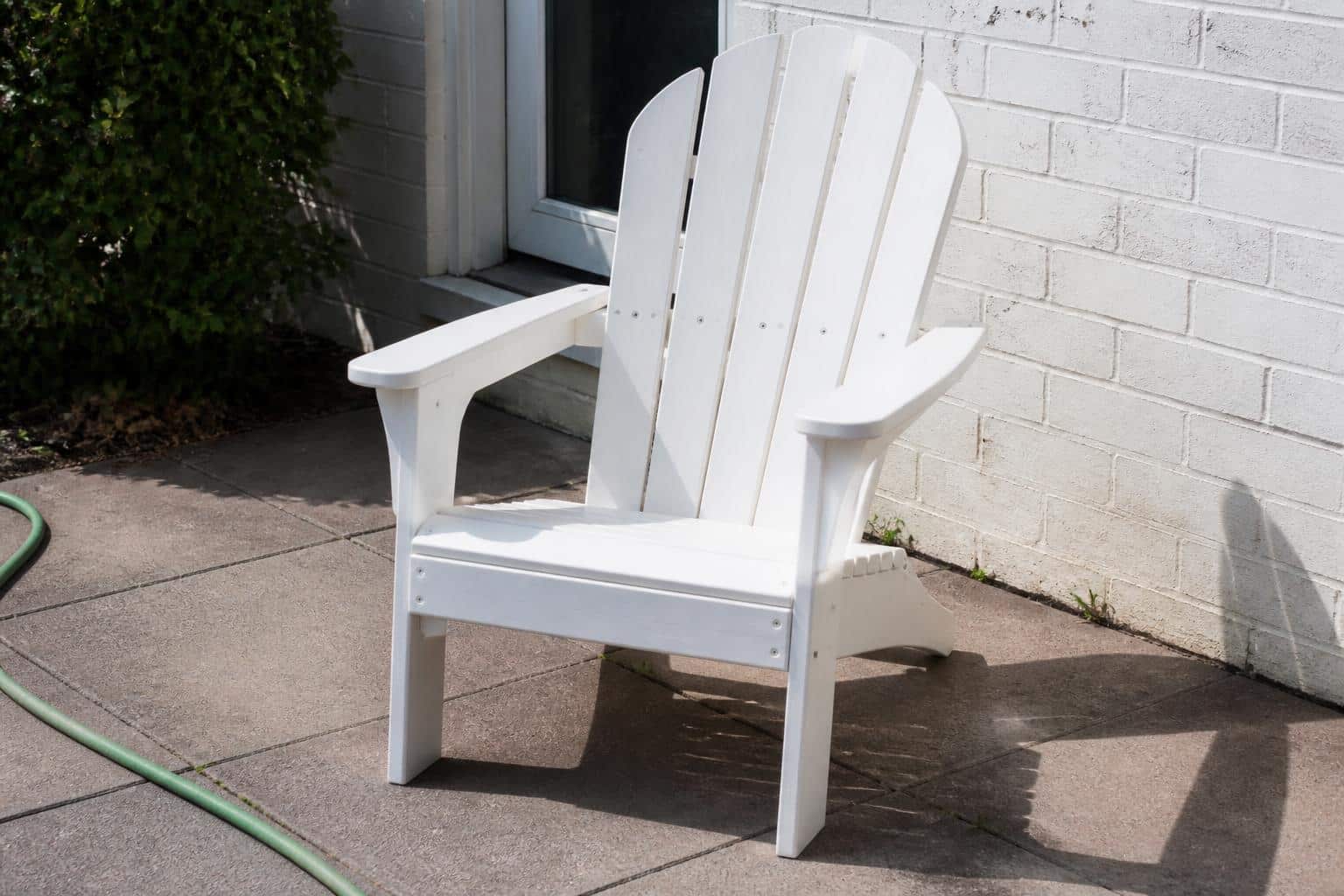
Compare the live listings for the Hampton Adirondack Chair, Armless Café Chair, and Counter Height Stool. Check each product page for the current price, dimensions, color options, and warranty terms before ordering.
How Your Environment Changes the Math
Where you live and how you use the furniture affects how quickly it shows wear. A chair on a shaded porch used occasionally generally faces less UV exposure and mechanical stress than the same chair in full sun, moved frequently, and exposed to high winds. No single duration applies to both situations, so compare the written coverage and care instructions for the exact product.
For a sunny patio, record how long the proposed location is exposed and whether shade is available when you will use it. Ask about finish-specific care and fading coverage. Do not assume a universal color ranking or that a particular location predicts the furniture’s lifespan.
Coastal environments add salt spray that can be hard on metal hardware and surface finishes. In freeze-thaw regions, water absorption is another important comparison point. Follow the manufacturer’s care guidance for year-round exposure, covers, cleaning, and storage.
Storage and covering can reduce exposure to wind-blown debris, dirt, and severe weather. Whether either step is necessary depends on the product and local conditions, so use the seller’s care instructions instead of assuming storage will add a specific number of years.
Getting Your Money’s Worth Over Time
Cost per year can be useful only when the service-life assumption is supported. Compare the current purchase price, shipping, maintenance, written structural and fade coverage, and how the piece will be used. Avoid building a value comparison around an unverified promise that one chair will last a precise number of years.
Wood and metal furniture have different care needs and failure modes. Teak may weather to a gray patina, cedar and pine typically need protective maintenance, and powder-coated metal can show wear if its finish is damaged. Compare the manufacturer’s documented care and coverage rather than applying one lifespan figure to every product made from the same general material.
Compare the exact care requirements and the costs you can document. Do not promise that covering, storage, treatment, or inspection is unnecessary for every poly product. Keep any ownership-cost scenario clearly separate from known purchase costs and verified policy terms.
Frequently Asked Questions
Does poly outdoor furniture get brittle in cold weather?
Marine-grade polymer is intended for outdoor use, but performance still depends on formulation, construction, existing damage, and care. Follow the product’s published guidance for cold-weather exposure and avoid using a general material label as a guarantee against every kind of damage.
Will the color fade over time?
Outdoor exposure may change a finish. PFTG provides five-year fading coverage under its written policy. Read the conditions and claim process rather than assuming an unstated threshold or color-through construction.
Do I need to bring poly furniture inside for winter?
Year-round exposure involves wind, debris, drainage, hardware, and local conditions as well as material. Follow the exact product’s care and storage instructions. Storage may reduce exposure, but it should not be presented as adding a guaranteed number of years.
What happens if a part breaks after several years?
Ask the seller whether replacement slats, hardware, or other components are available for the exact model and what the written warranty covers. Parts availability can change, so confirm it directly instead of assuming that a factory-direct or imported product will remain repairable for a particular length of time.
Compare Plastic Furniture To Go’s American-made pieces by their published dimensions, materials, care guidance, and written coverage. Browse the shop page for the Hampton Adirondack Chair, cafe seating, counter stools, and matching end tables, with free nationwide shipping. Use the contact form for questions about a particular piece or your intended use.

