
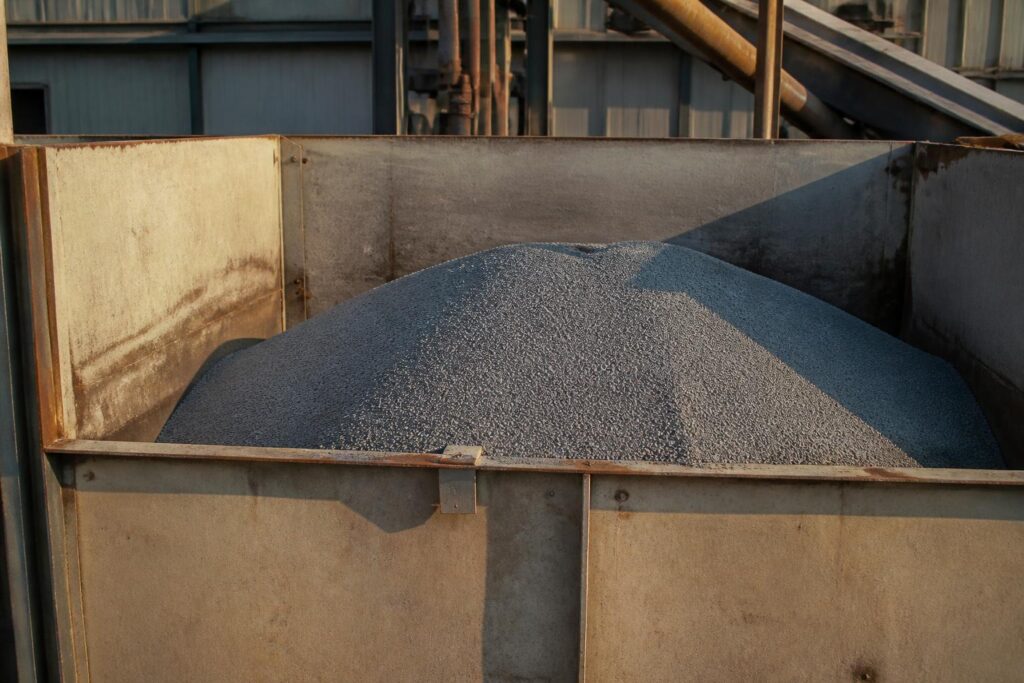
When a seller describes recycled plastic outdoor furniture, the most useful next question is what that statement means for the particular product. A general recycling story does not establish the chair’s composition, manufacturing process, strength, or service life. This guide helps you separate material disclosures, production claims, and finished-product specifications so you can ask focused questions before ordering.
Separate three different recycling claims
First, a product may contain recycled material. Ask for the percentage, which components it covers, and whether the claim concerns post-consumer material or another source. The same percentage can mean different things if it describes only a seating surface in one listing and the complete furniture item in another.
Second, a manufacturer may recycle waste from its own operations. That describes what happens to offcuts or other manufacturing waste. It does not automatically establish the amount of recycled material in each finished chair. Plastic Furniture To Go confirms that the family business recycles 100% of manufacturing waste; we do not turn that fact into an unverified product-content percentage.
Third, a seller may describe a product as recyclable. Whether you can actually recycle it depends on local collection options, the product’s components, and the receiving program’s rules. The EPA recycling overview explains the general topic. Check your local program instead of assuming that a complete chair can go into a household recycling bin.
Ask how the exact furniture is manufactured
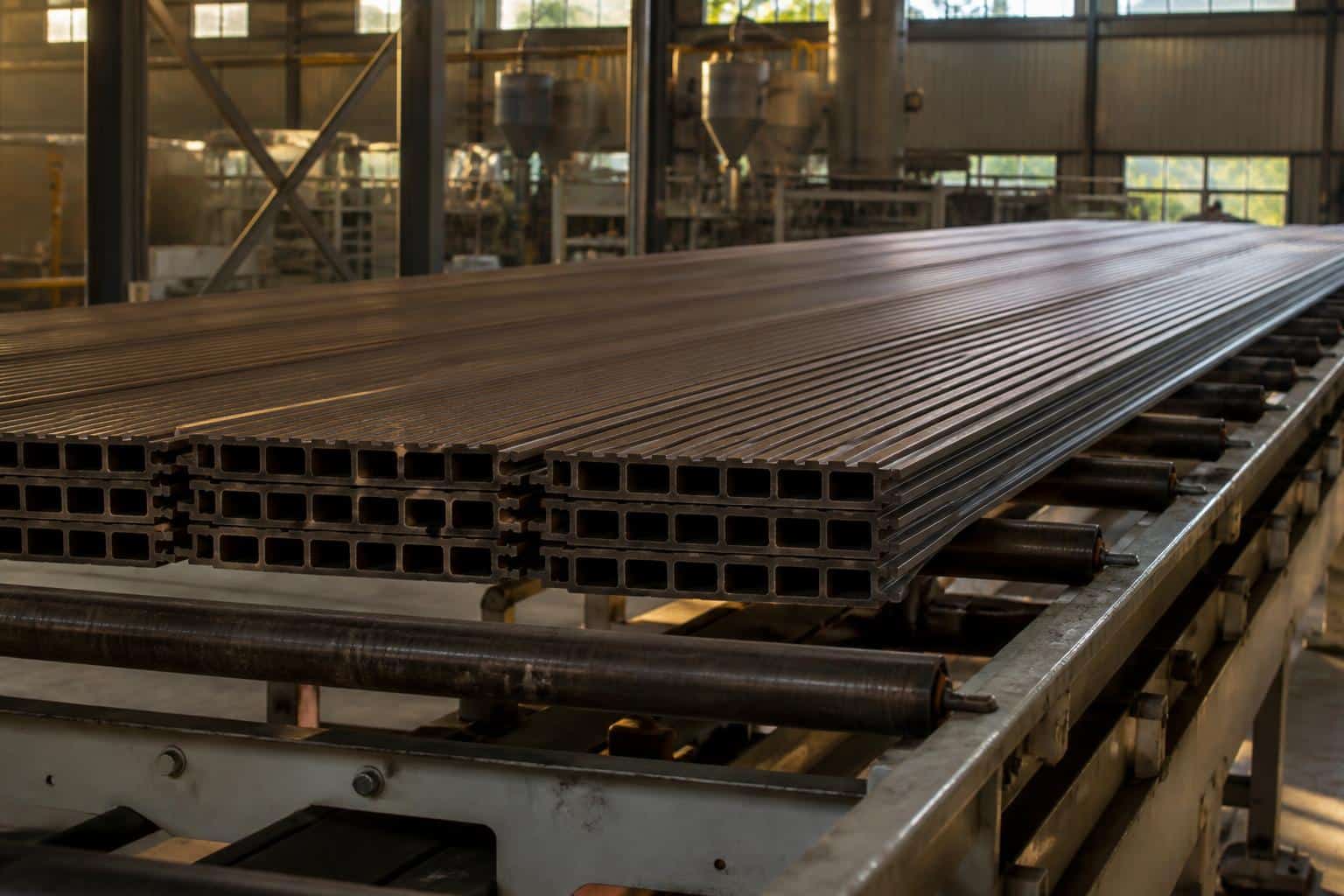
Different plastic furniture products can use different materials and construction methods. If a listing describes a sequence involving collected containers, processing, boards, cutting, and assembly, ask whether that is the documented process for the product being sold or a general illustration. An industry example should not be presented as proof of a specific brand’s production method.
Useful questions include which components use the stated material, whether parts are molded or cut from stock, what hardware connects them, and how the manufacturer documents the disclosure. Ask for the source of a claim about a particular resin, board thickness, additive, or finish. Appearance and product weight cannot answer every one of those questions.
Factory photographs can show equipment, work areas, parts, and people handling materials. They do not independently establish a polymer grade, a recycled-content percentage, or the complete process used for every product. Treat image captions as claims that also need to match what is documented and visibly shown.
Keep a short comparison record with the model name, the seller’s exact claim, and the supporting product page or written response. That makes it easier to compare different listings without accidentally substituting a general manufacturing explanation for a verified specification.
Evaluate the finished furniture separately
Recycled content is one purchasing consideration, but it is not a complete quality score. Compare overall dimensions, seating proportions, product weight, assembly instructions, hardware, and intended use. If you need a tested load-capacity rating, ask for that specific information. Do not estimate it from a material description or the weight of the furniture.
Fit matters whether the material is recycled or newly produced. Mark the chair and table footprints in your space, leave room to use them, and measure the route to storage. Our patio furniture fit calculator can help compare a simple arrangement with available floor space.
Care and exposure are also product-specific. Read the instructions for the finished surfaces, hardware, and any accessories. A recycled-content claim does not promise that a chair cannot fade, crack, warp, or be damaged. No material story removes the need to inspect furniture or prepare loose items before severe weather.

Use the documented PFTG facts and written coverage
Plastic Furniture To Go offers American-made chairs, stools, and end tables. Our published material is Marine Grade Polymer, and every product uses 3/16-inch stainless steel hardware. Those are the specifications to use when comparing the collection; we do not substitute an unverified HDPE grade, recycled-content percentage, or production sequence.
Published product weights are 52 lb for the Hampton Adirondack Chair, 27 lb for the Armless Café Chair, 21 lb for the Counter Height Stool, and 15 lb for each Hampton end table. These figures help with handling and storage planning. They are not wind ratings or load-capacity ratings.
Products ship knock-down in a box and are designed for simple assembly in about 20 minutes with the included hardware. Free nationwide shipping is included. Orders generally ship within three business days, with a separate carrier transit estimate of two to seven business days. Check current order details when planning delivery.
The written policy sets out seven-year structural and five-year fading coverage, along with return conditions. Compare the covered issues and exclusions instead of treating the warranty period as a lifespan forecast. A material or recycling claim does not replace those terms.
Frequently asked questions
Does recycling manufacturing waste mean the chair contains recycled plastic?
Not necessarily. Waste handling and finished-product composition are separate disclosures. Ask for the product-specific recycled-content claim if that information matters to you.
Can a general recycling source verify a furniture listing?
No. General sources explain the topic. A model’s composition and manufacturing claims need evidence from the manufacturer or documentation that specifically covers the product.
Is recycled plastic furniture automatically stronger or longer-lasting?
No. Recycled content alone does not establish finished-product performance. Compare design, testing where available, care instructions, and written coverage.
Can I recycle an old outdoor chair locally?
Check your local collection or recycling program. Acceptance can depend on the complete item, its materials, and whether components need to be separated.
Where can I check PFTG’s material and product details?
Read the Marine Grade Polymer guide and current product listings. Use the contact form for a question that the published specifications do not answer.

